The electronic era opens around the Second World War, when the demands of cryptanalysis, ballistics and atomic computation require speeds unreachable by mechanical means. At Bletchley Park, Alan Turing and his teams designed from 1940 the electromechanical Bombe, then in 1943–1944 Tommy Flowers's Colossus machines, the first programmable electronic digital computers, used to break the Lorenz cipher. In the United States, Howard Aiken completed the Harvard Mark I in 1944, while John Atanasoff and Clifford Berry had already built between 1939 and 1942 the ABC, a pioneer of electronic binary arithmetic. The completion of ENIAC in 1945 at the University of Pennsylvania by John Presper Eckert and John Mauchly, followed by the publication in 1945 of John von Neumann's "First Draft of a Report on the EDVAC", fixed the stored-program architecture that would durably structure subsequent machines. The invention of the transistor by John Bardeen, Walter Brattain and William Shockley at Bell Labs in 1947, crowned by the Nobel Prize in 1956, freed electronics from the vacuum tube. Grace Hopper designed in 1952 the first compiler (A-0) and contributed to COBOL in 1959, introducing programming in a language close to English. Jack Kilby (Texas Instruments, 1958) and Robert Noyce (Fairchild, 1959) independently invented the integrated circuit. In 1969, Ken Thompson and Dennis Ritchie developed at Bell Labs the first version of UNIX, which would become portable thanks to the C language created in 1972. During this period the computer moved from military prototype to commercial mainframe (IBM 704 in 1954, System/360 in 1964), while the miniaturisation prepared by the integrated circuit heralded the microcomputer revolution. The essential concepts of modern computing — von Neumann architecture, compilation, time-sharing operating systems, virtual memory — emerged between 1945 and 1970. The electronic era bequeathed to the next the idea of a personal computer, foreshadowed by the Xerox Alto (1973) and by Engelbart's 1968 demonstration at SRI (mouse, windows, hypertext).
Electronic Era
Innovations of this period
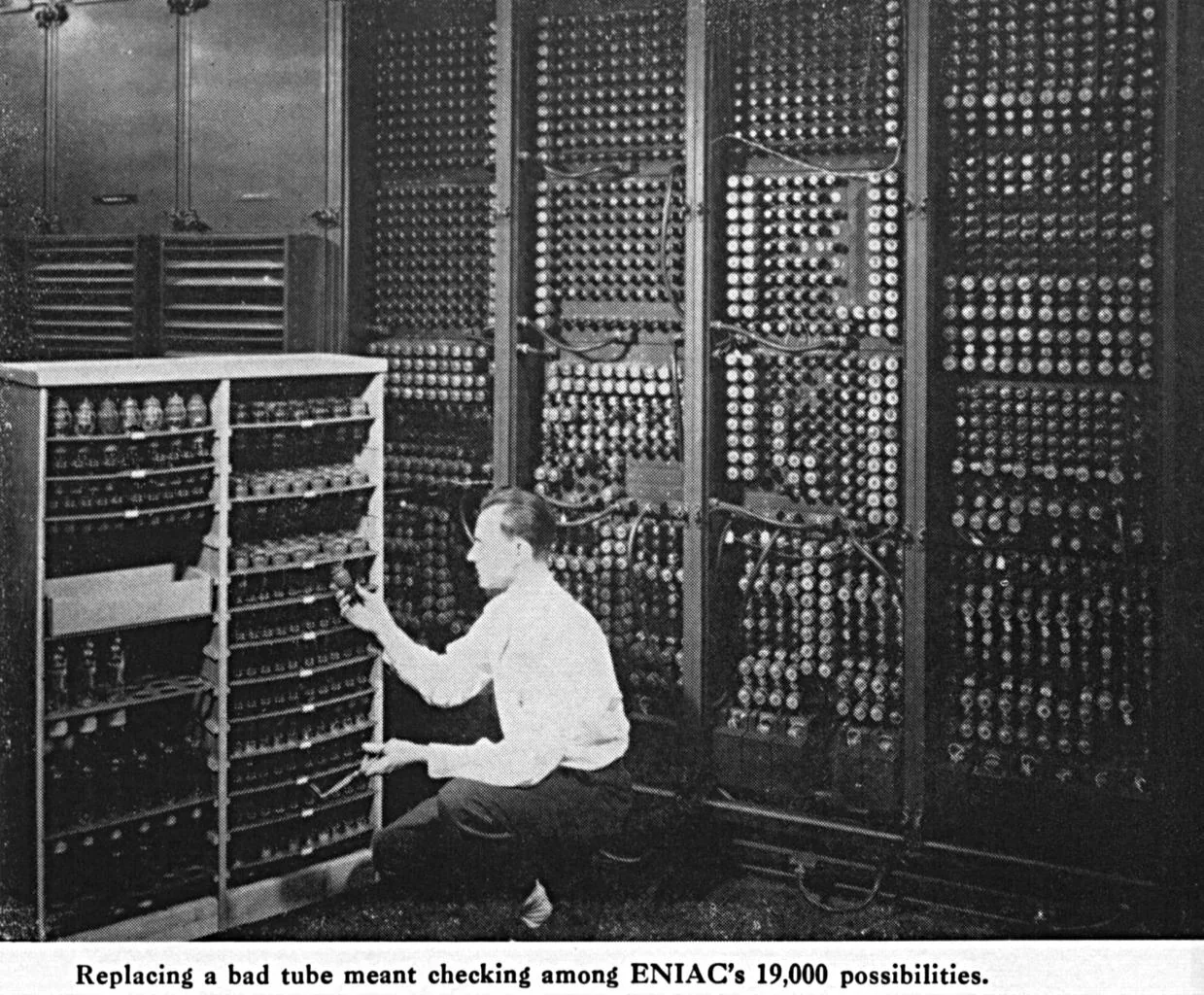 U.S. Army Photo — Public domain, via Wikimedia Commons
1945
U.S. Army Photo — Public domain, via Wikimedia Commons
1945
ENIAC
Hardware / Electronic computer
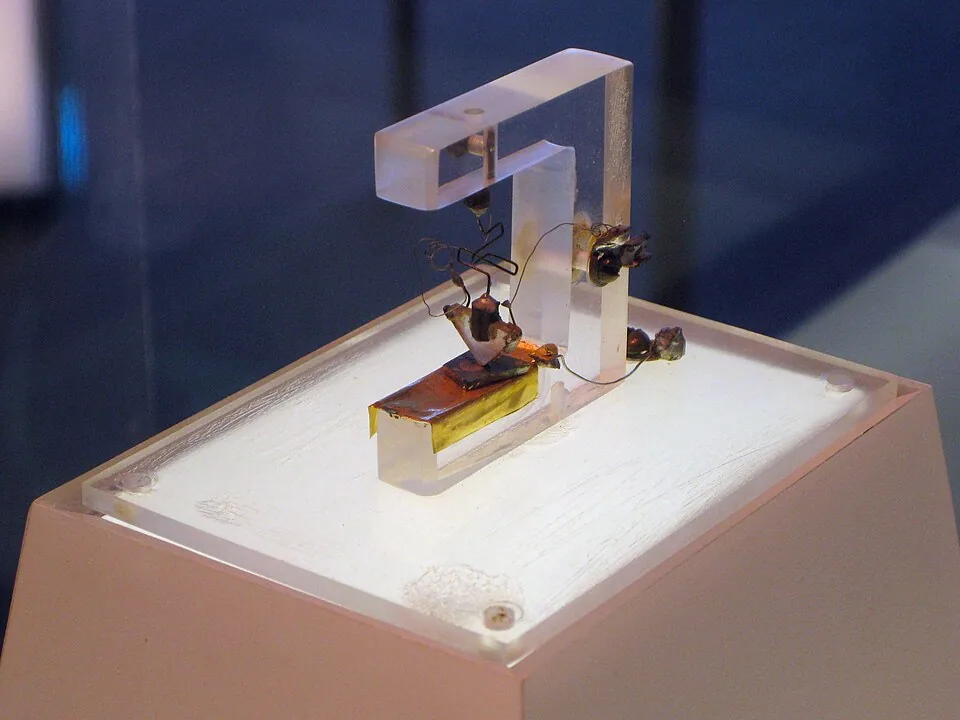 Windell Oskay — CC BY 2.0, via Wikimedia Commons
1947
Windell Oskay — CC BY 2.0, via Wikimedia Commons
1947
Transistor
Hardware / Electronic component
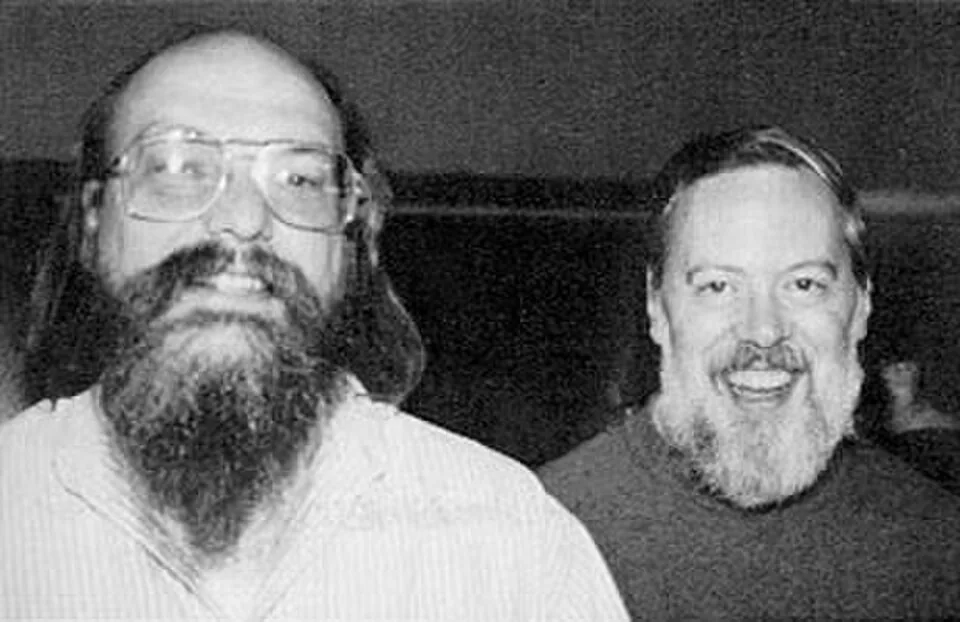 Jargon File — Public domain, via Wikimedia Commons
1969
Jargon File — Public domain, via Wikimedia Commons
1969
UNIX
Software / Operating system
 SqlPac, modified by Ferdna — CC BY-SA 3.0, via Wikimedia Commons
1974
SqlPac, modified by Ferdna — CC BY-SA 3.0, via Wikimedia Commons
1974
SQL
Software / Query language
 Rezonansowy — Public domain, via Wikimedia Commons
1972
Rezonansowy — Public domain, via Wikimedia Commons
1972
C
Software / Programming language
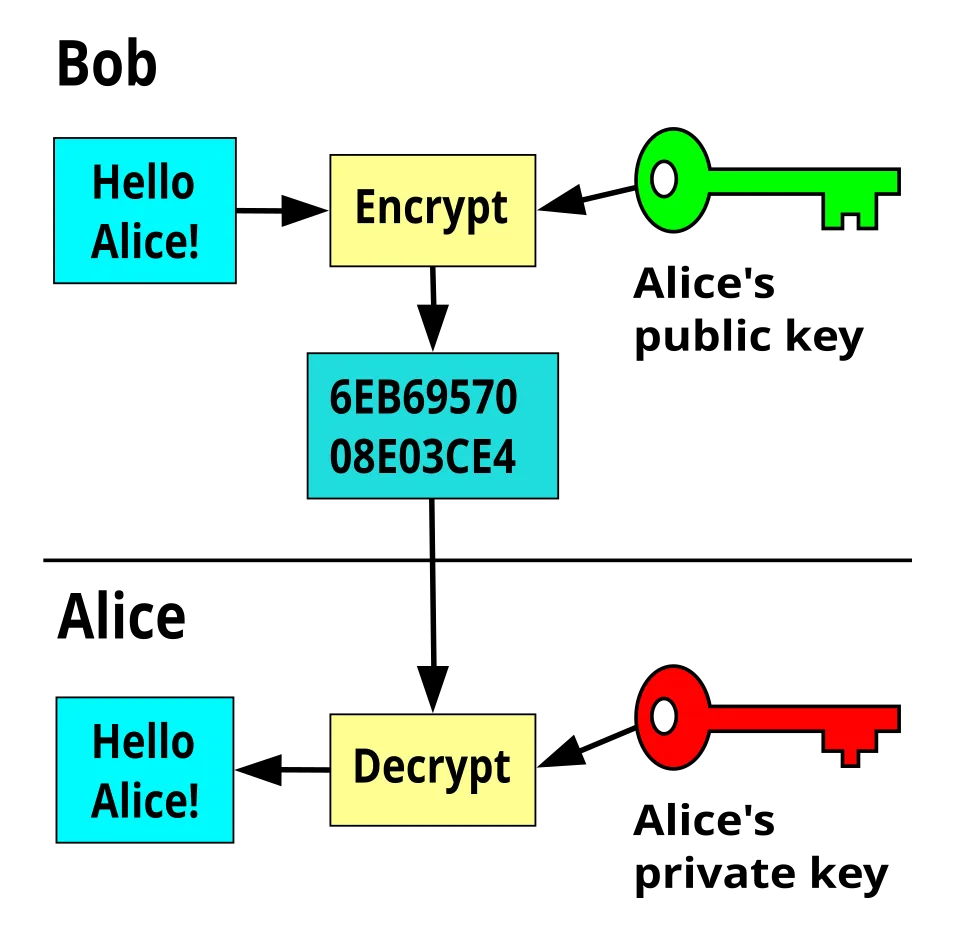 David Göthberg — Public domain, via Wikimedia Commons
1977
David Göthberg — Public domain, via Wikimedia Commons
1977
RSA
Cryptography / Security
Pioneers of this period
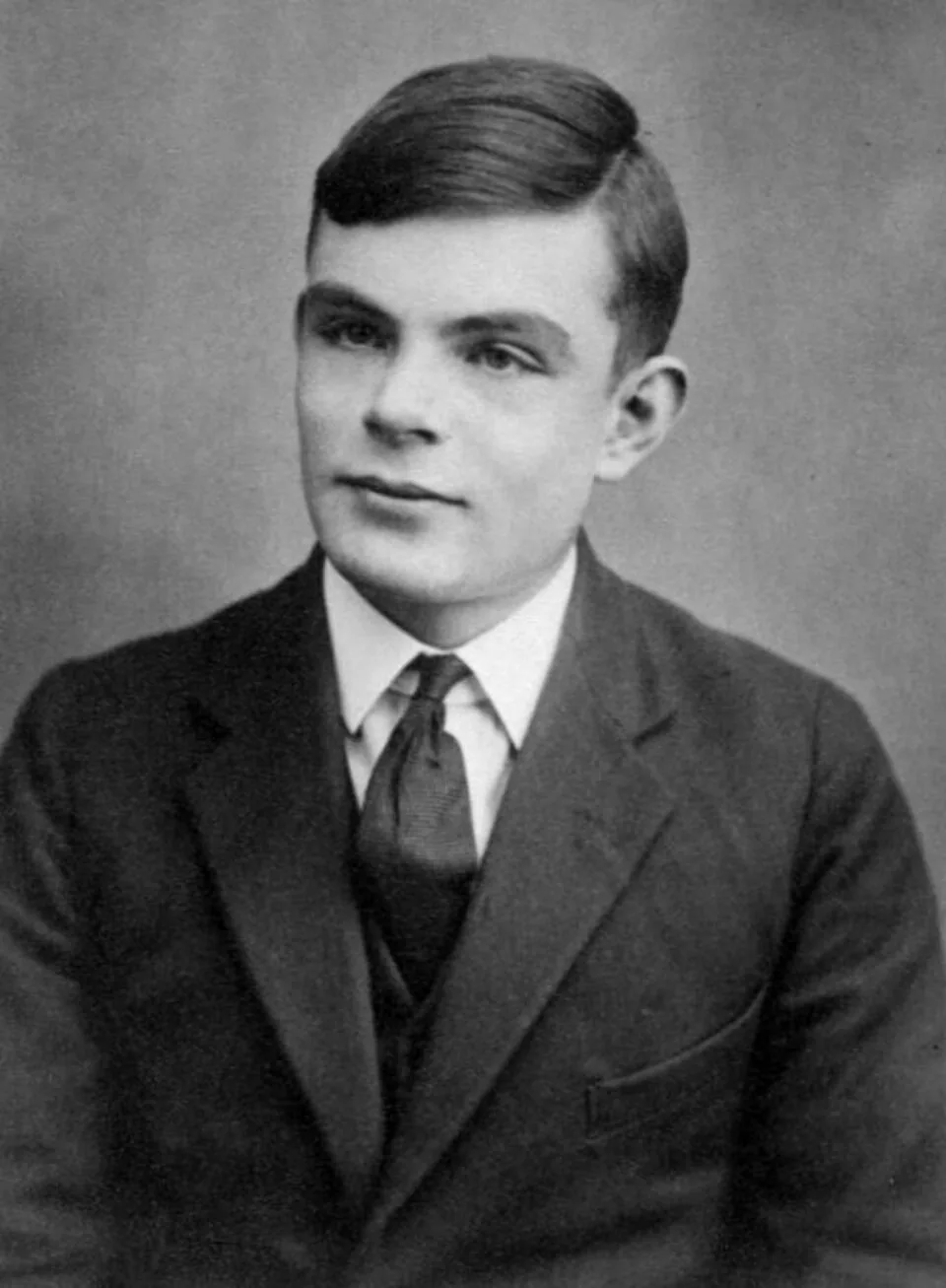 Unknown author — Public domain, via Wikimedia Commons
1912 — 1954
Unknown author — Public domain, via Wikimedia Commons
1912 — 1954
Alan Turing
British mathematician, theoretical founder of computer science and cryptanalyst
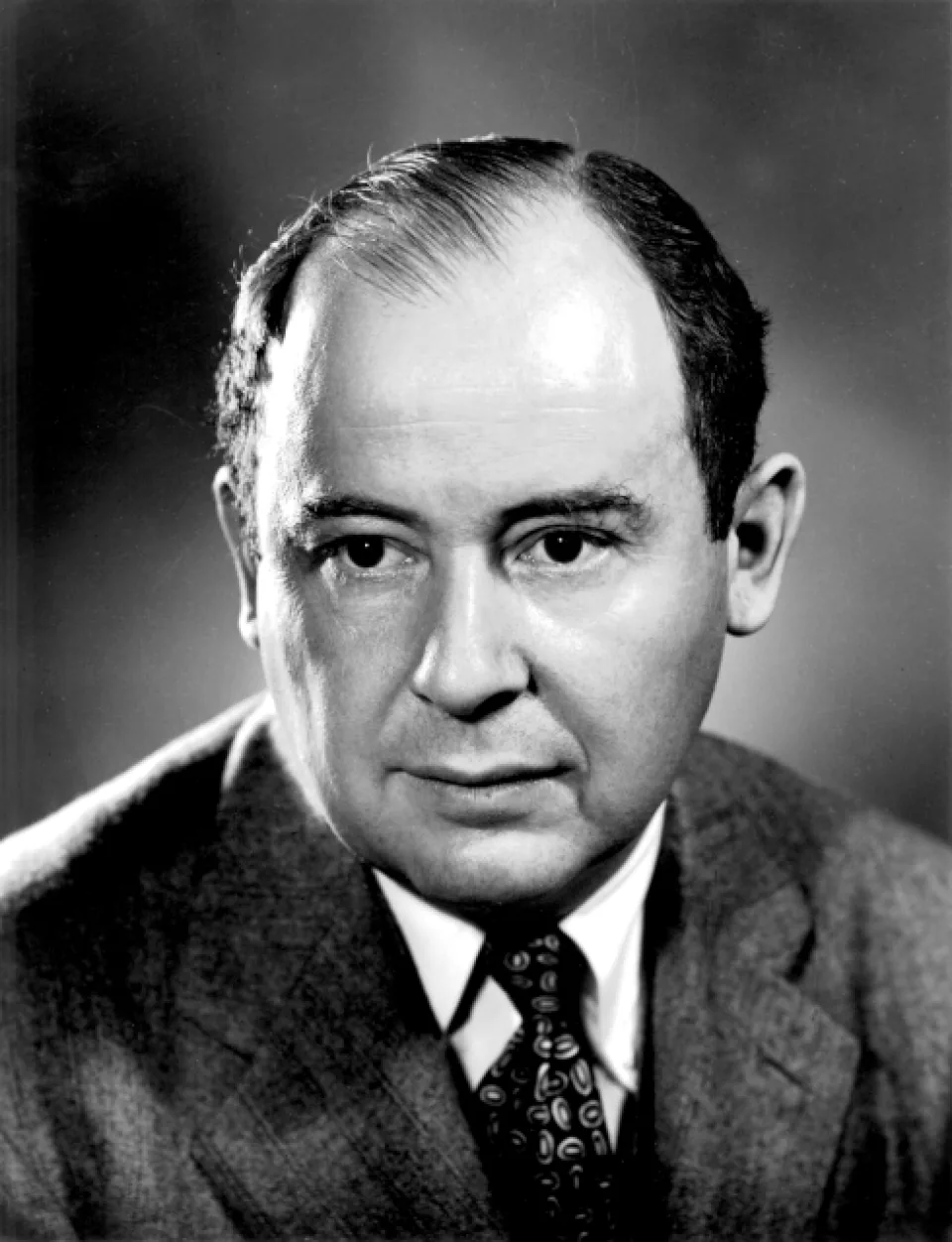 Los Alamos National Laboratory — Public domain, via Wikimedia Commons
1903 — 1957
Los Alamos National Laboratory — Public domain, via Wikimedia Commons
1903 — 1957
John von Neumann
Hungarian-American mathematician, architect of the stored-program computer
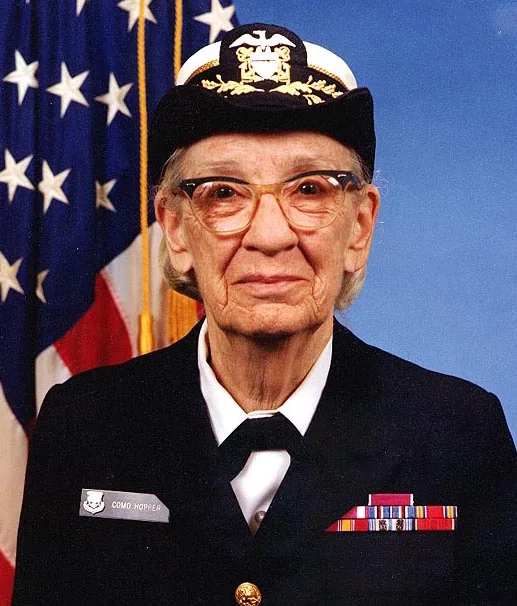 James S. Davis, U.S. Navy — Public domain, via Wikimedia Commons
1906 — 1992
James S. Davis, U.S. Navy — Public domain, via Wikimedia Commons
1906 — 1992
Grace Hopper
American computer scientist and naval officer, inventor of the compiler
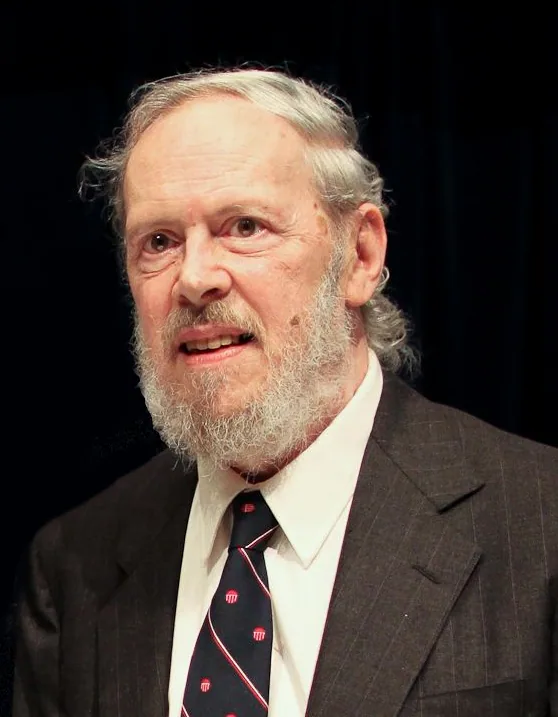 Denise Panyik-Dale — CC BY 2.0, via Wikimedia Commons
1941 — 2011
Denise Panyik-Dale — CC BY 2.0, via Wikimedia Commons
1941 — 2011
Dennis Ritchie
American computer scientist, creator of the C language and co-author of UNIX
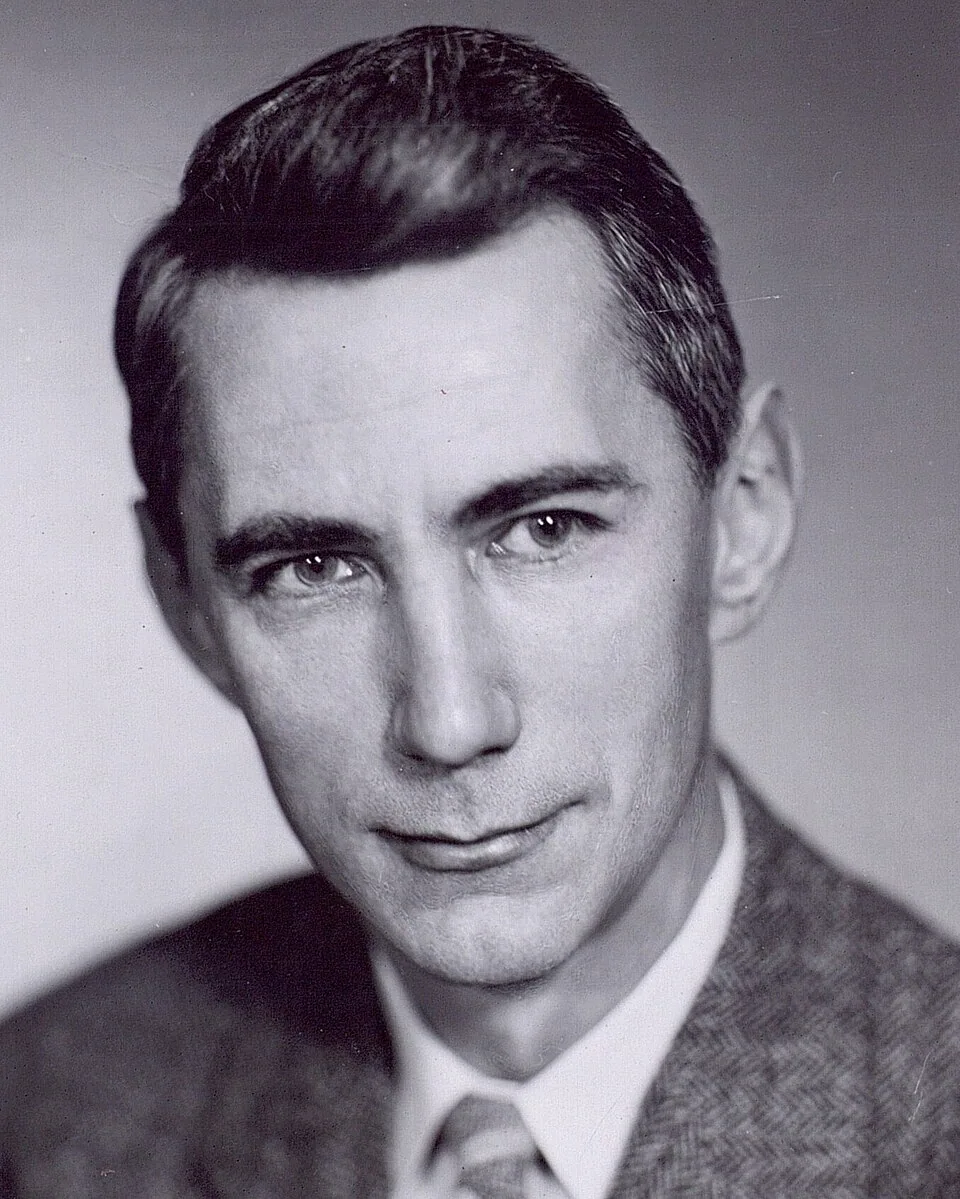 Tekniska Museet — CC BY 2.0, via Wikimedia Commons
1916 — 2001
Tekniska Museet — CC BY 2.0, via Wikimedia Commons
1916 — 2001
Claude Shannon
American mathematician and electrical engineer who founded information theory and invented the concept of the bit
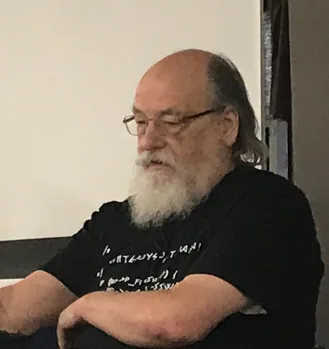 A.C. Diller — CC BY-SA 4.0, via Wikimedia Commons
1943
A.C. Diller — CC BY-SA 4.0, via Wikimedia Commons
1943
Ken Thompson
American computer scientist who co-created Unix with Dennis Ritchie and invented the B programming language, precursor to C
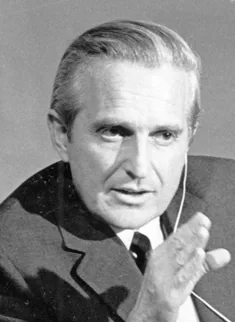 SRI International — CC BY-SA 3.0, via Wikimedia Commons
1925 — 2013
SRI International — CC BY-SA 3.0, via Wikimedia Commons
1925 — 2013
Douglas Engelbart
American engineer who invented the computer mouse and pioneered graphical user interfaces, hypertext, and computer-supported collaborative work
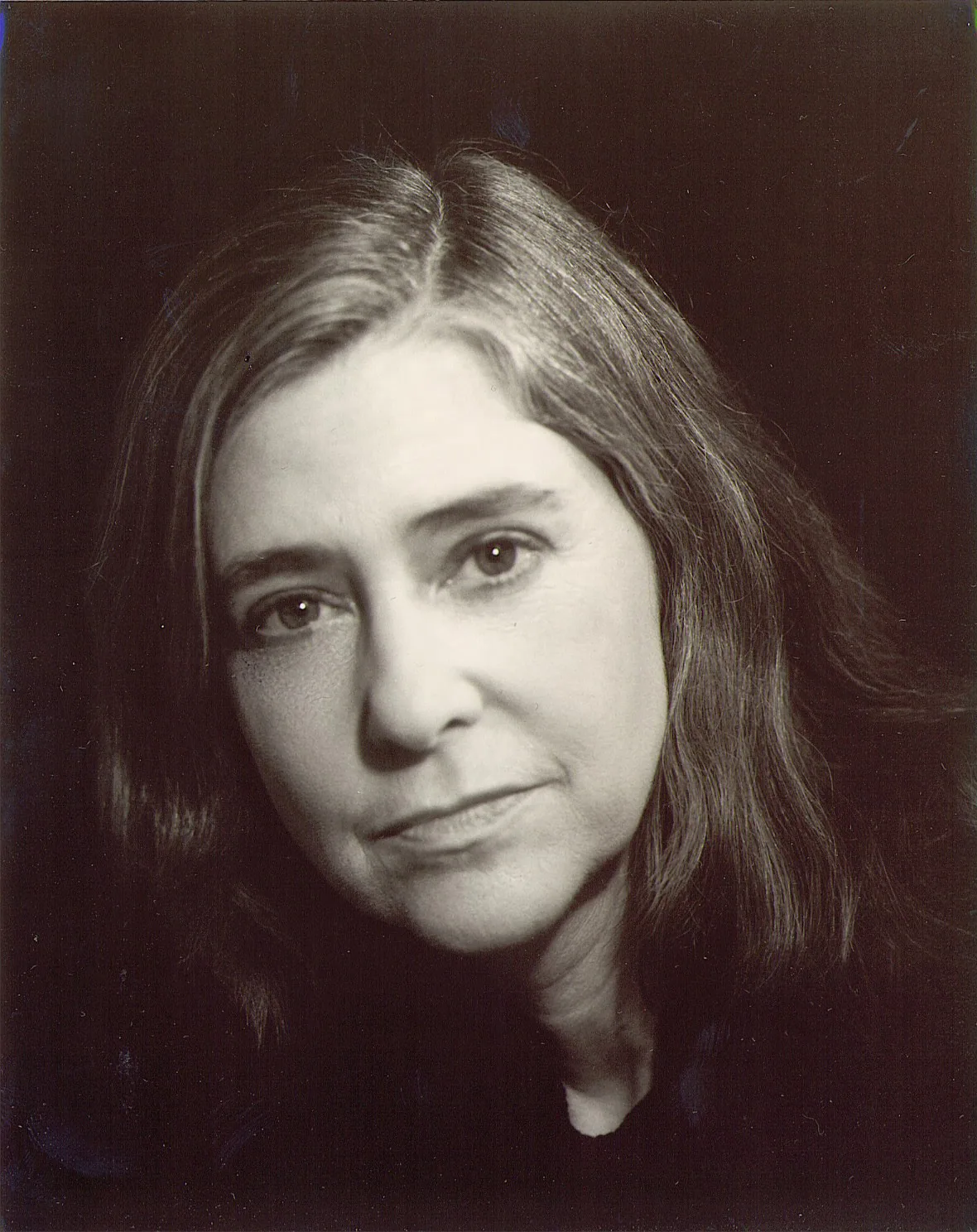 Unknown author — CC BY-SA 3.0, via Wikimedia Commons
1936
Unknown author — CC BY-SA 3.0, via Wikimedia Commons
1936
Margaret Hamilton
American software engineer who led the development of Apollo 11's onboard flight software at NASA and coined the term "software engineering"
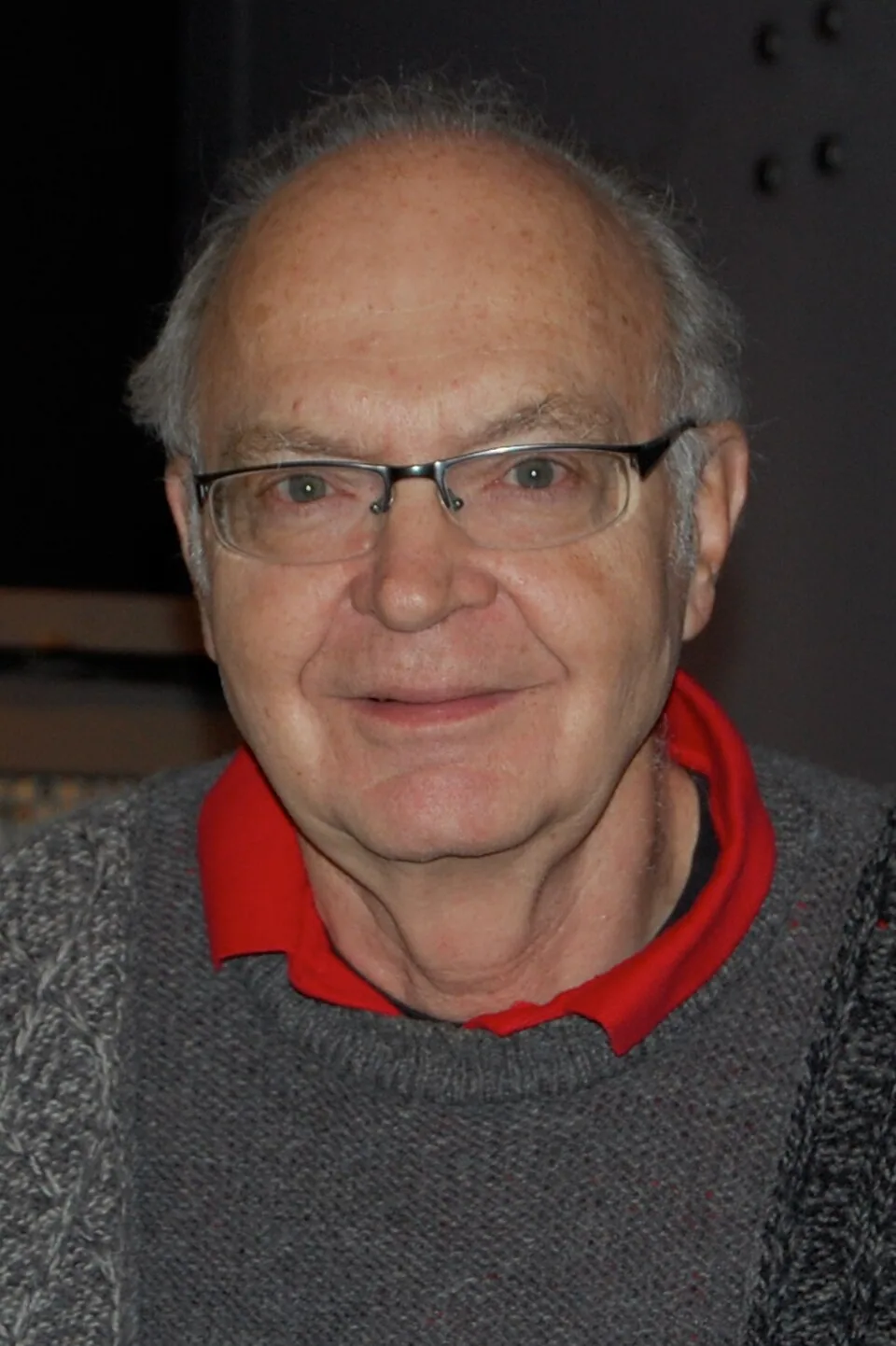 Jacob Appelbaum — CC BY-SA 2.0, via Wikimedia Commons
1938
Jacob Appelbaum — CC BY-SA 2.0, via Wikimedia Commons
1938
Donald Knuth
American computer scientist, author of The Art of Computer Programming and creator of the TeX typesetting system, founding father of algorithm analysis
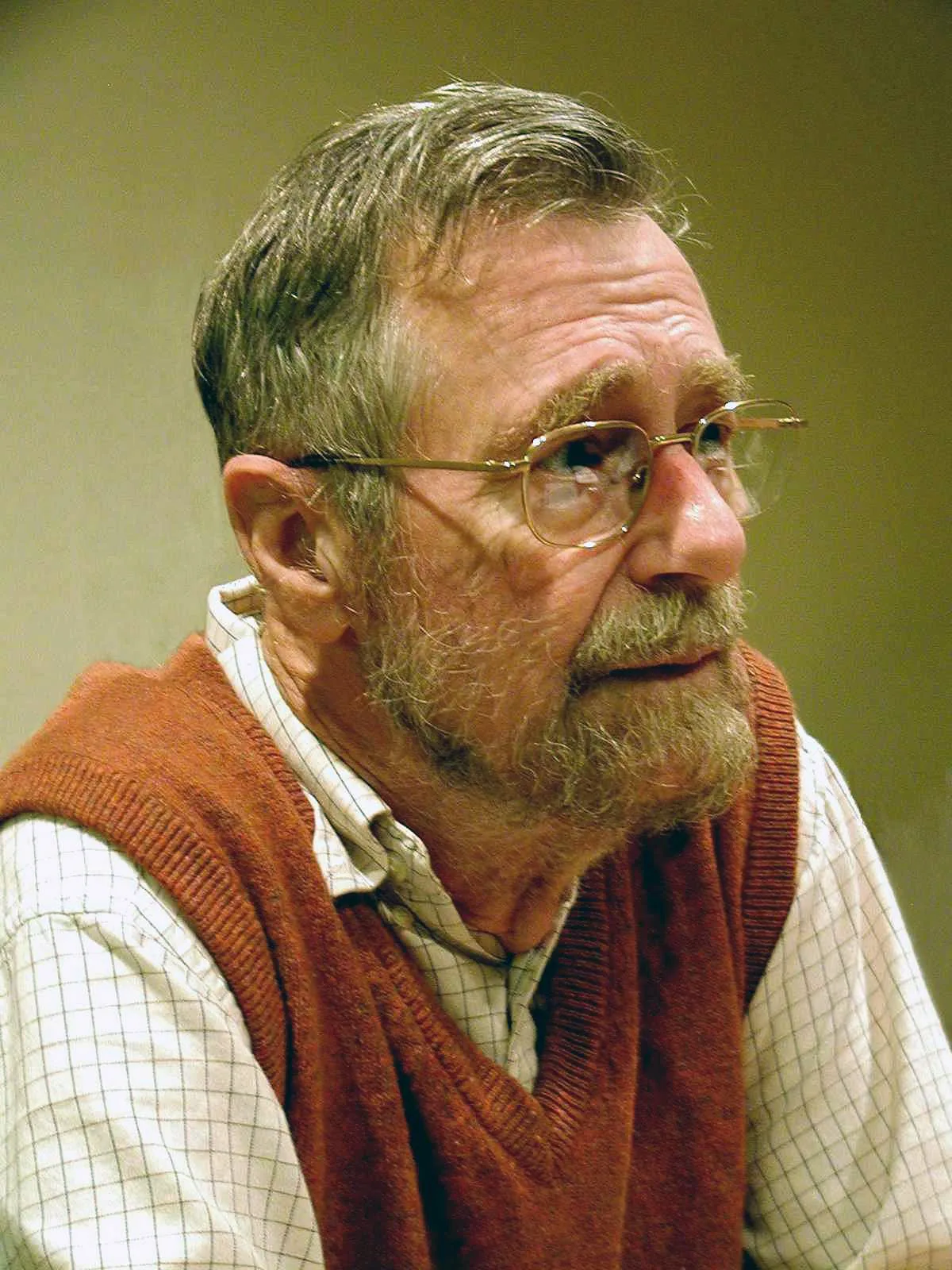 Hamilton Richards, UT Austin — CC BY-SA 3.0, via Wikimedia Commons
1930 — 2002
Hamilton Richards, UT Austin — CC BY-SA 3.0, via Wikimedia Commons
1930 — 2002
Edsger W. Dijkstra
Dutch computer scientist who devised the shortest path algorithm, pioneered structured programming, and invented the semaphore synchronization primitive