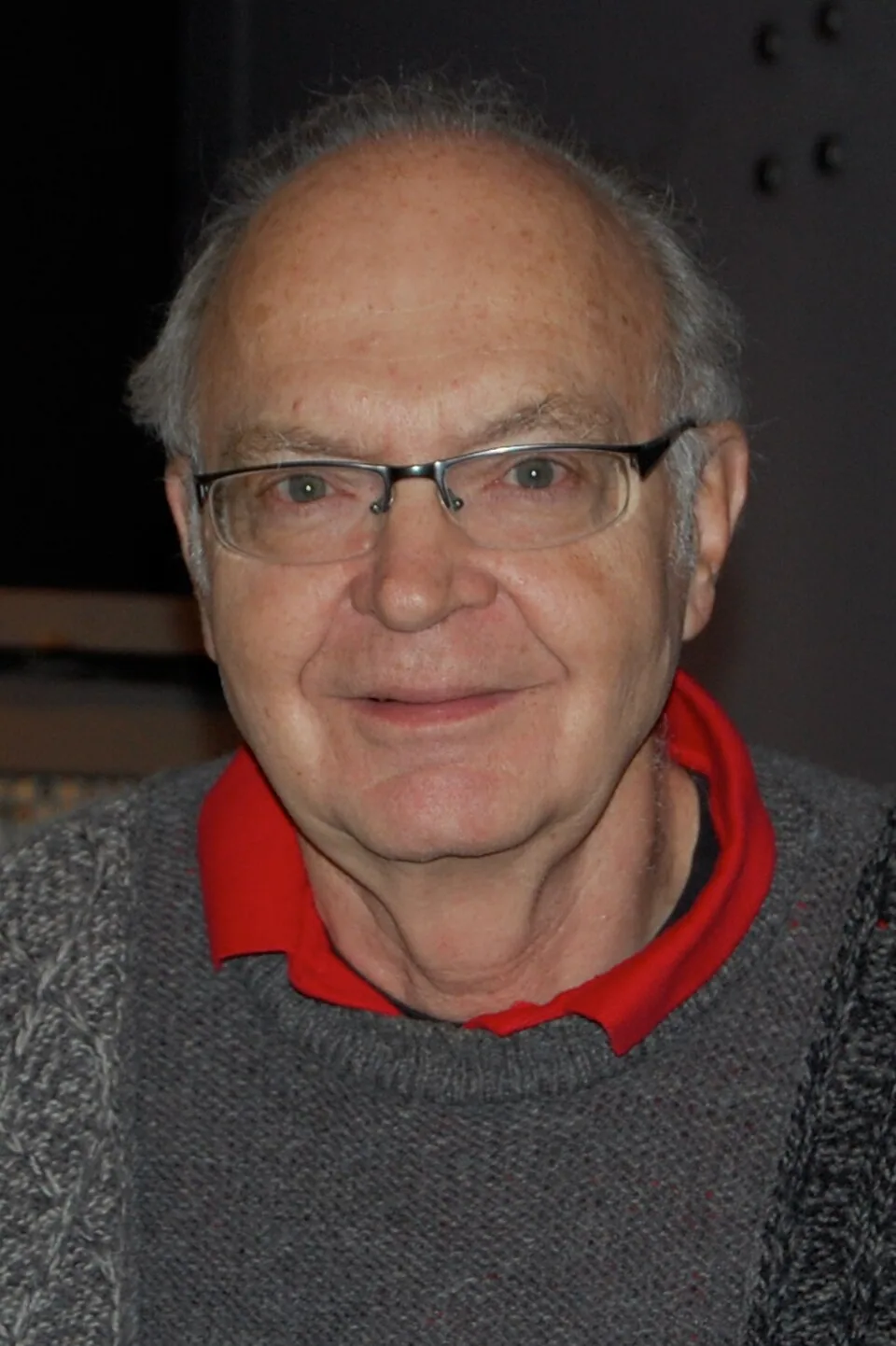
Donald Ervin Knuth received both a bachelor's and a master's degree simultaneously from the Case Institute of Technology in 1960 — a rare distinction awarded by the faculty in recognition of his precocious genius — followed by a doctorate in mathematics from Caltech in 1963. His aptitudes had been evident since high school, when he catalogued 4,500 words from the phrase "Ziegler's Giant Bar" at a competition whose organizers had found only 2,500. A professor at Caltech and then Stanford from 1969, he became the first holder of the Fletcher Jones Professorship in Computer Science, the university's first endowed chair in the discipline. The first volume of The Art of Computer Programming appeared in 1968: what was planned as a single monograph became a projected seven-volume series — still unfinished — treating with unmatched mathematical rigor the analysis of algorithms, data structures, random number generation, sorting, and searching. Knuth introduced the asymptotic O(n) notation in its modern sense and established the formal foundations of algorithmic complexity analysis. Bill Gates once remarked that sending a résumé accompanied by the complete series was a sufficient letter of recommendation to be hired at Microsoft. In 1976, while preparing a revised edition of Volume 2, Knuth discovered to his dismay that the original typefaces were no longer available. This led him to spend eight years developing TeX, a document composition system for mathematical text, and METAFONT, a font design language. TeX revolutionized scientific publishing worldwide and remains, five decades later, the indispensable standard for mathematics and theoretical physics journals. Knuth also invented "literate programming," a paradigm that interweaves source code and documentation into a single coherent document.
1938
· USA
Donald Knuth
American computer scientist, author of The Art of Computer Programming and creator of the TeX typesetting system, founding father of algorithm analysis