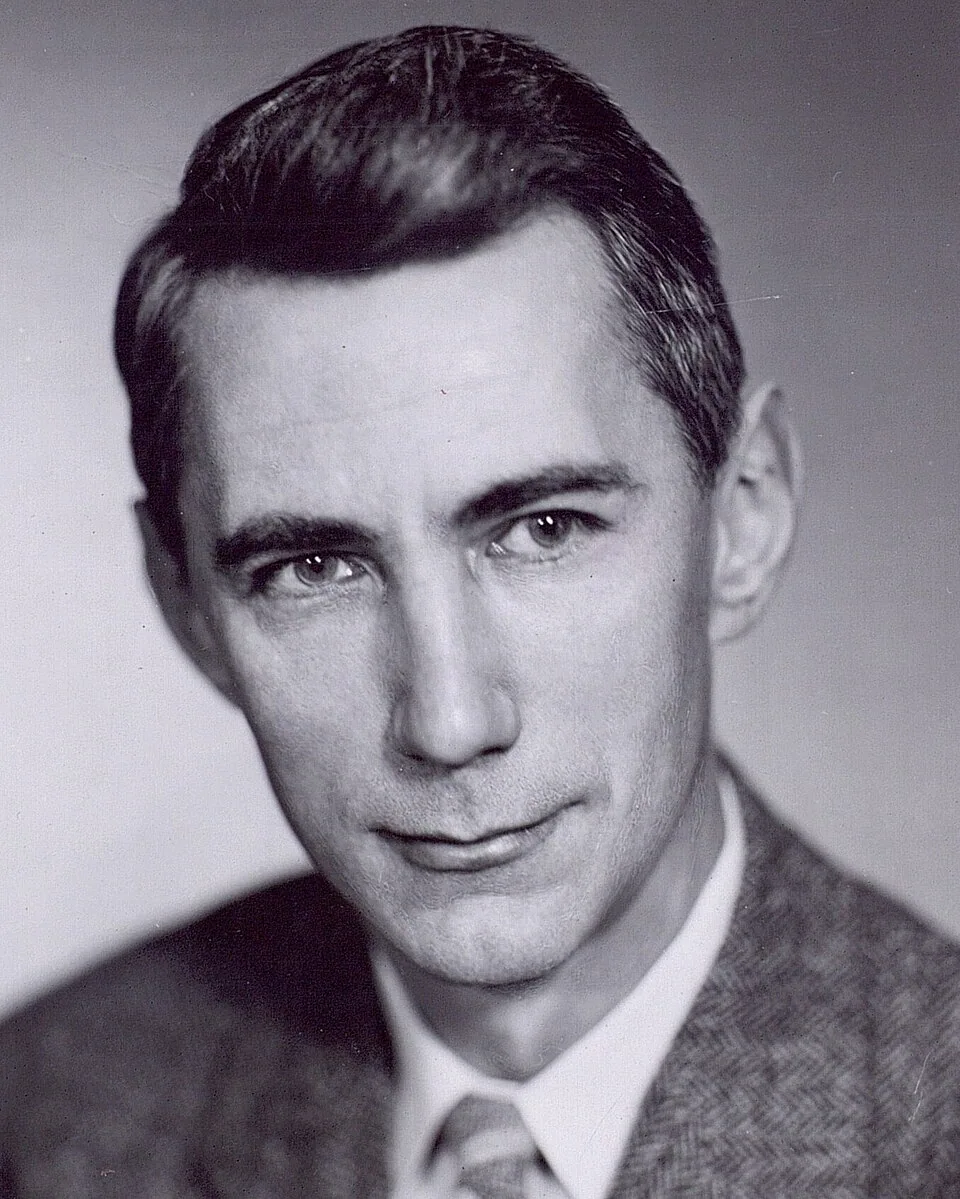
The double degree Claude Elwood Shannon earned at the University of Michigan in 1936 — in mathematics and electrical engineering — gave him the intellectual tools to venture into territory his contemporaries could not yet map. Arriving at MIT that same year as a research assistant to Vannevar Bush, he delivered in 1937 a master's thesis, "A Symbolic Analysis of Relay and Switching Circuits," which applied Boolean algebra to electrical switching networks. Historians regard it as one of the most significant master's theses of the twentieth century, establishing the theoretical foundations on which all digital computing would rest. Joining Bell Laboratories in 1941, Shannon worked during the war on cryptanalysis and anti-aircraft fire control before turning to the question that preoccupied him: how could information be measured and transmitted reliably? In July and October 1948, he published in the Bell System Technical Journal his landmark paper, "A Mathematical Theory of Communication." Shannon introduced the notions of information entropy, redundancy, and channel capacity, and coined the term "bit" as the elementary unit of information. Scientific American would later describe this paper as the "Magna Carta of the Information Age." A professor at MIT from 1958 onward, Shannon spent his later academic years on automata theory, artificial intelligence, and the construction of eccentric machines, including an electronic maze solved by a mechanical mouse. His work on the reliable compression and transmission of data forms the theoretical bedrock of everything — from digital radio to video streaming — that rests on the idea that information can be quantified and shielded from noise. Alzheimer's disease clouded his final years before his death in 2001, but the theory he had founded at the age of thirty-two has never ceased to structure the digital age.
1916 — 2001
· USA
Claude Shannon
American mathematician and electrical engineer who founded information theory and invented the concept of the bit