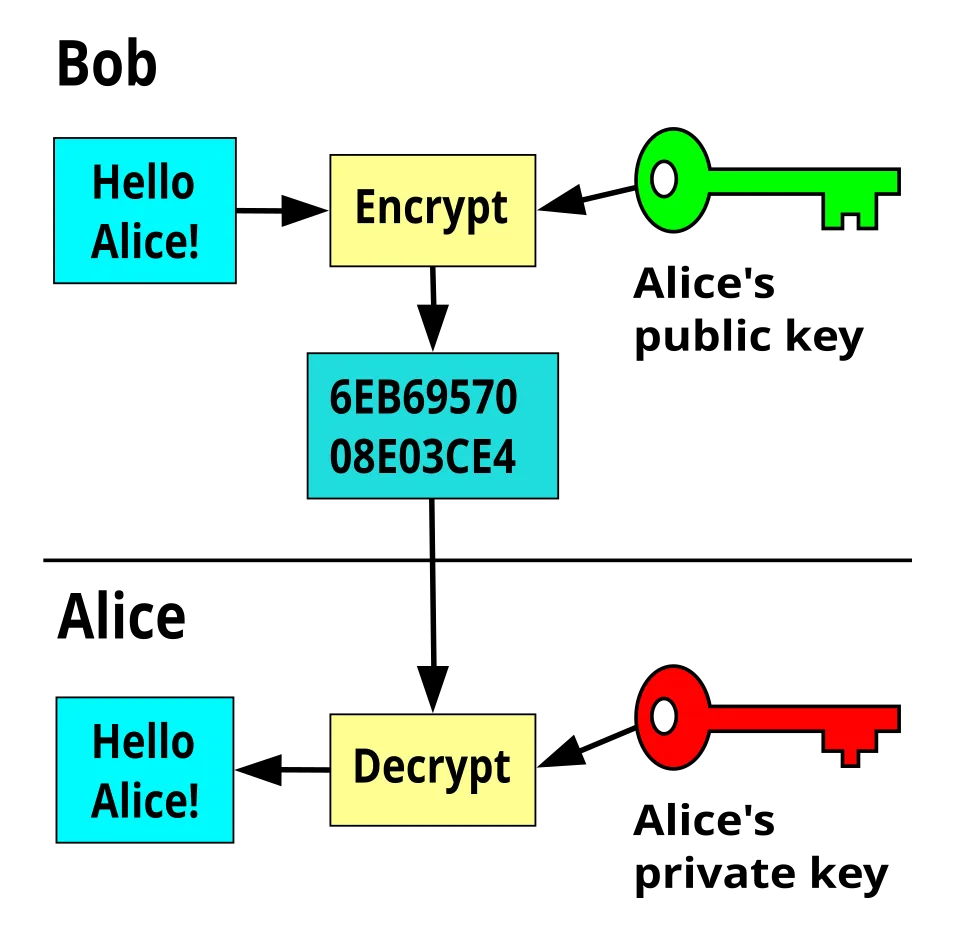
The RSA cryptographic system was publicly described in 1977 by three scientists from the Massachusetts Institute of Technology: Ron Rivest, Adi Shamir and Leonard Adleman. The acronym RSA derives from the surnames of these three researchers. Their development of the system traced back to several months of intensive research during which Rivest and Shamir, as computer scientists, proposed various potential one-way functions, while Adleman, trained as a mathematician, systematically identified the weaknesses of each approach. In April 1977, during Passover, the three collaborators found themselves at a student's house. Unable to sleep, Rivest lay down on a couch with a mathematics textbook and began thinking about the one-way function problem. He spent the rest of the night formalising his idea mathematically and had written much of the research paper by dawn. The revolutionary significance of the RSA system lies in its solution to the problem of public-key encryption. Unlike traditional symmetric cryptographic systems that required the secure exchange of a shared secret key, RSA enabled anyone to encrypt a message using a widely distributed public key, while only the holder of the corresponding private key could decrypt the message. The system rests on a fundamental mathematical property related to the difficulty of factoring large integers — an operation that is easy in one direction but computationally intractable in reverse with classical algorithms. The RSA system was published in Scientific American magazine in 1977 and distributed free to anyone who submitted a stamped, self-addressed envelope to the developers, democratising access to this revolutionary cryptographic technology. The United States Patent 4,405,829 was granted to MIT on 20 September 1983. It is notable that an equivalent system had been developed secretly in 1973 by Clifford Cocks at GCHQ (Government Communications Headquarters), the British signals intelligence agency, but remained classified until 1997. RSA became the cornerstone of public-key cryptography and made possible HTTPS, digital signatures, SSL/TLS certificates and the entire security infrastructure of the Internet. When the patent expired in 2000 and the algorithm entered the public domain, its adoption became universal across all computer security systems worldwide.
1977
Cryptography / Security
RSA