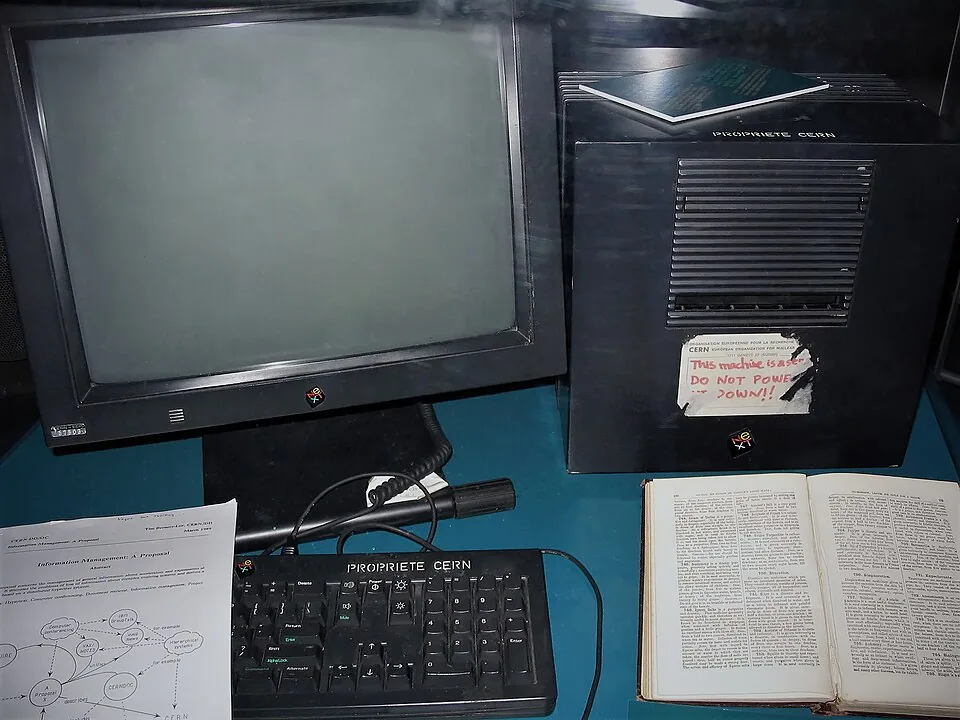
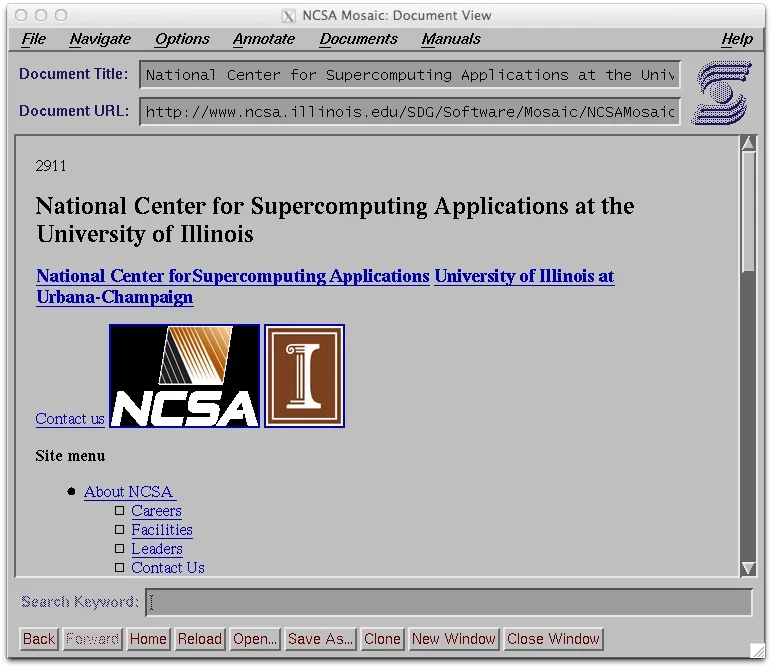
The Web era opens with the proposal drafted in March 1989 by Tim Berners-Lee at CERN, "Information Management: A Proposal", and culminates in the publication of the first site info.cern.ch on 20 December 1990, followed by the release of the technology into the public domain on 30 April 1993 — a founding act that guaranteed the universality of the network. HTTP, HTML and URL, designed by Berners-Lee with Robert Cailliau, formed the technical triptych of a worldwide web layered over the Internet. The appearance of the Mosaic graphical browser in 1993, developed by Marc Andreessen and Eric Bina at NCSA, and then of Netscape Navigator in 1994, gave the Web its consumer face. The period that followed saw the birth of the digital economy: Yahoo! was founded in 1994 by Jerry Yang and David Filo, Amazon in 1994 by Jeff Bezos, eBay in 1995 by Pierre Omidyar, Google in 1998 by Larry Page and Sergey Brin at Stanford with the PageRank algorithm, Wikipedia in 2001 by Jimmy Wales and Larry Sanger. Sun Microsystems released Java in 1995, promising "write once, run anywhere"; Brendan Eich designed JavaScript at Netscape in ten days the same year. The W3C, founded by Berners-Lee in 1994 at MIT, standardised HTML 4 (1997), CSS1 (1996) and XML (1998). The 1995–2000 dot-com bubble, its excesses and its burst in March 2000, left behind a massive infrastructure (fibre, data centres) that would feed the next stage. Linus Torvalds released Git in 2005, a tool that would unify open-source collaboration. This first Web era was dominated by an editorial model: authors published, visitors read. Pages were static, interactions limited to server-side forms. The turn toward the participatory was already announced from 2002 by the emergence of blogs (Blogger 1999, WordPress 2003) and wikis. The arrival of Gmail in 2004, making heavy use of XMLHttpRequest and foreshadowing Ajax, closed the period by opening that of Web 2.0, in which the user would become co-author of the content and applications would rival desktop software.
Web Era
Innovations of this period
 Larry Ewing, Simon Budig, Garrett LeSage — CC0, via Wikimedia Commons
1991
Larry Ewing, Simon Budig, Garrett LeSage — CC0, via Wikimedia Commons
1991
Linux
Software / Kernel and operating system
 Coolcaesar — CC BY-SA 3.0, via Wikimedia Commons
1991
Coolcaesar — CC BY-SA 3.0, via Wikimedia Commons
1991
World Wide Web
Software / Hypertext system
 Charles Severance — CC0, via Wikimedia Commons
1993
Charles Severance — CC0, via Wikimedia Commons
1993
Mosaic
Software / Web browser
 sbmehta (Sun Microsystems) — BSD License, via Wikimedia Commons
1995
sbmehta (Sun Microsystems) — BSD License, via Wikimedia Commons
1995
Java
Language / Programming language
 Google — Public domain (logo, simple shapes/text), via Wikimedia Commons
1998
Google — Public domain (logo, simple shapes/text), via Wikimedia Commons
1998
Platform / Search engine
 Wikimedia Foundation — CC BY-SA 3.0, via Wikimedia Commons
2001
Wikimedia Foundation — CC BY-SA 3.0, via Wikimedia Commons
2001
Wikipedia
Platform / Collaborative encyclopedia
 Jason Long — CC BY 3.0, via Wikimedia Commons
2005
Jason Long — CC BY 3.0, via Wikimedia Commons
2005
Git
Software / Version control system
 Michel Bakni — CC BY-SA 4.0, via Wikimedia Commons
1974
Michel Bakni — CC BY-SA 4.0, via Wikimedia Commons
1974
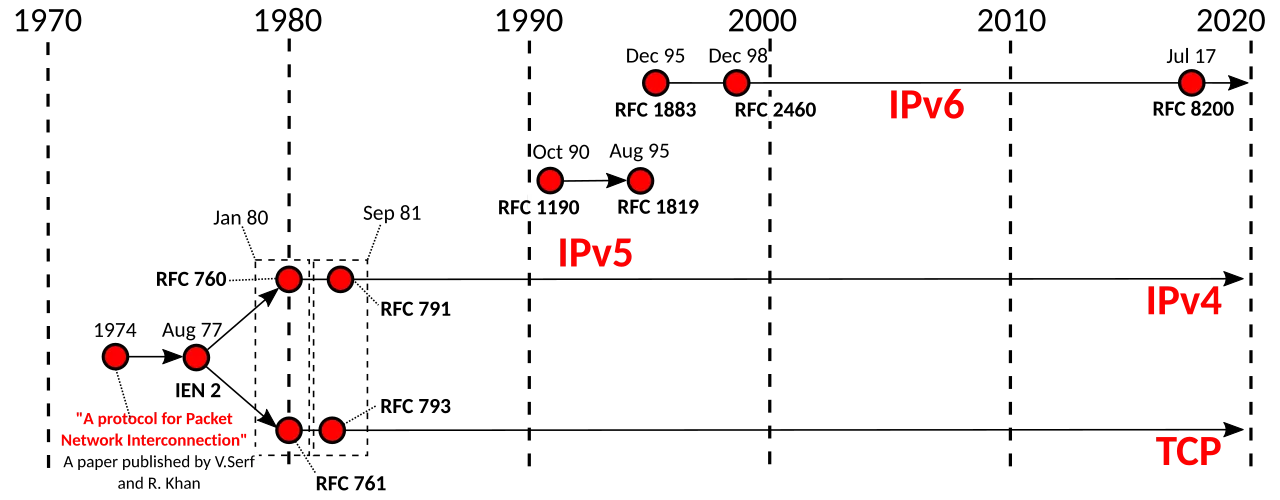
TCP/IP
Protocol / Networking
 W3C — CC BY 3.0, via Wikimedia Commons
1991
W3C — CC BY 3.0, via Wikimedia Commons
1991
HTML
Software / Markup language
 Just van Rossum — Public domain, via Wikimedia Commons
1991
Just van Rossum — Public domain, via Wikimedia Commons
1991
Python
Software / Programming language
 Christopher Williams — MIT license / Public domain, via Wikimedia Commons
1995
Christopher Williams — MIT license / Public domain, via Wikimedia Commons
1995
JavaScript
Software / Web programming language
Pioneers of this period
 Paul Clarke — CC BY-SA 4.0, via Wikimedia Commons
1955
Paul Clarke — CC BY-SA 4.0, via Wikimedia Commons
1955
Tim Berners-Lee
British computer scientist, inventor of the World Wide Web
 Unknown / LinuxMag.com — CC BY-SA 3.0, via Wikimedia Commons
1969
Unknown / LinuxMag.com — CC BY-SA 3.0, via Wikimedia Commons
1969
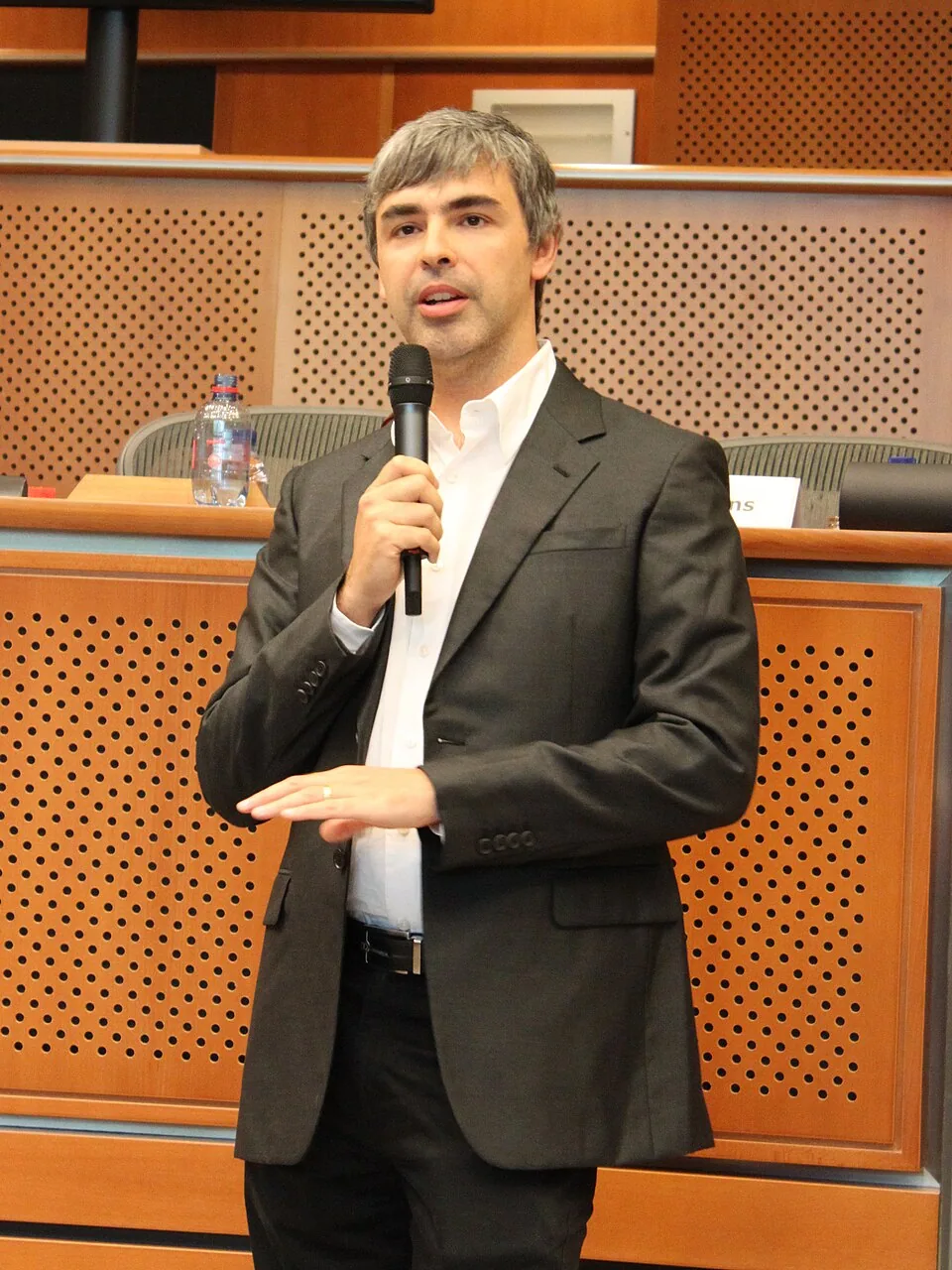
Linus Torvalds
Finnish software engineer, creator of the Linux kernel and of Git
 Marcin Mycielski, European Parliament — CC BY-SA 4.0, via Wikimedia Commons
1973
Marcin Mycielski, European Parliament — CC BY-SA 4.0, via Wikimedia Commons
1973
Larry Page
American computer scientist and entrepreneur, co-founder of Google
 Duncan Hull, Royal Society — CC BY-SA 3.0, via Wikimedia Commons
1943
Duncan Hull, Royal Society — CC BY-SA 3.0, via Wikimedia Commons
1943
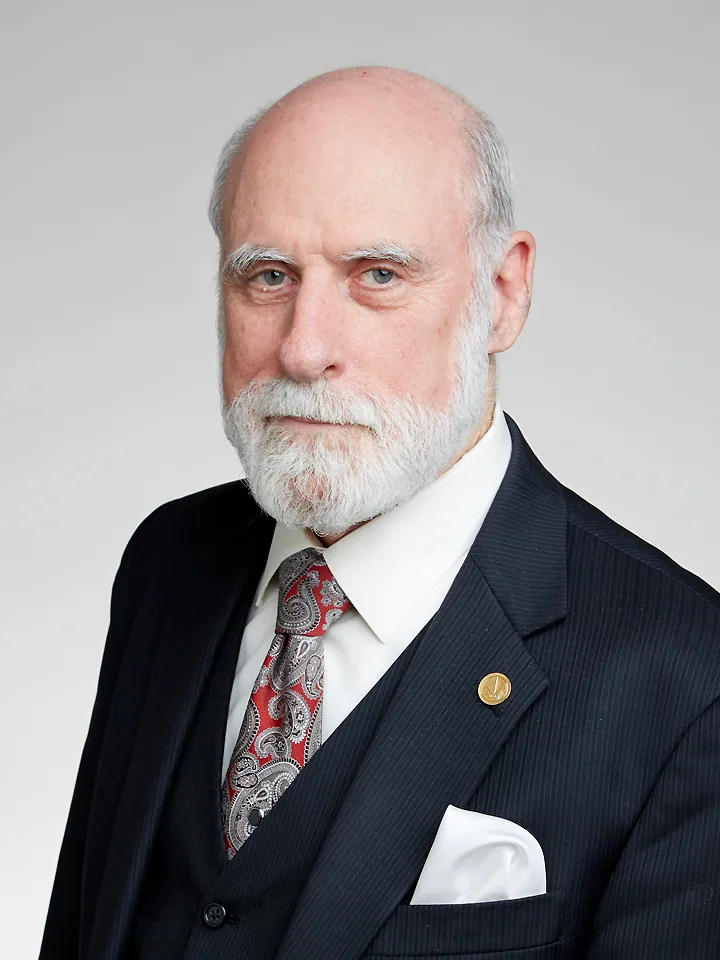
Vint Cerf
American computer scientist who co-authored the TCP/IP protocol with Bob Kahn and is widely regarded as a founding father of the Internet
 PyCon US — CC BY-SA 4.0, via Wikimedia Commons
1956
PyCon US — CC BY-SA 4.0, via Wikimedia Commons
1956
Guido van Rossum
Dutch programmer who created the Python language in 1989, now the dominant language for data science and artificial intelligence
 Heron — CC BY-SA 2.0, via Wikimedia Commons
1955
Heron — CC BY-SA 2.0, via Wikimedia Commons
1955
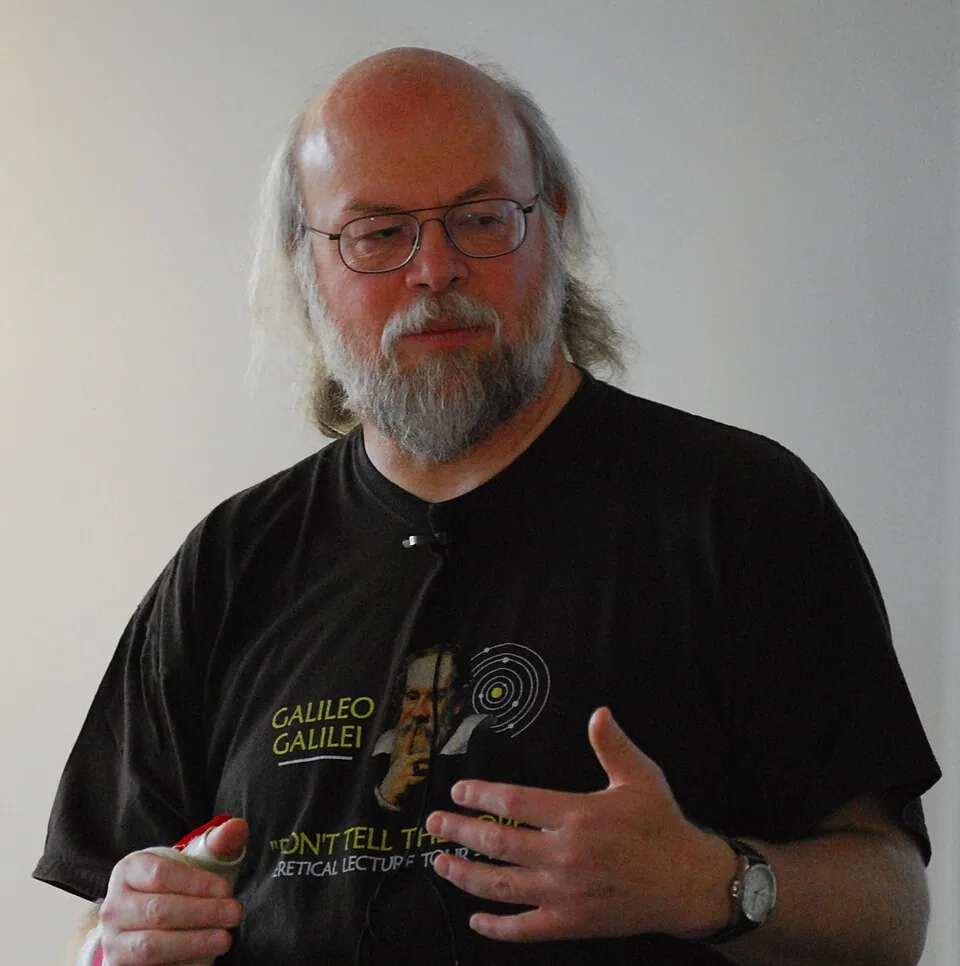
James Gosling
Canadian computer scientist who created the Java programming language in 1994 and the "Write Once, Run Anywhere" paradigm