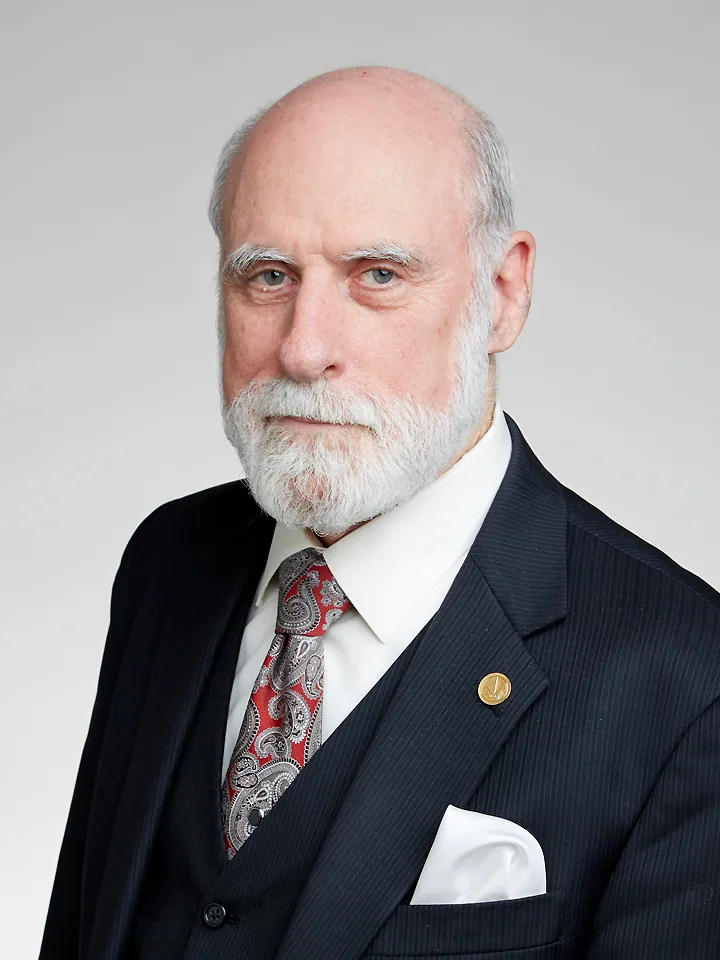
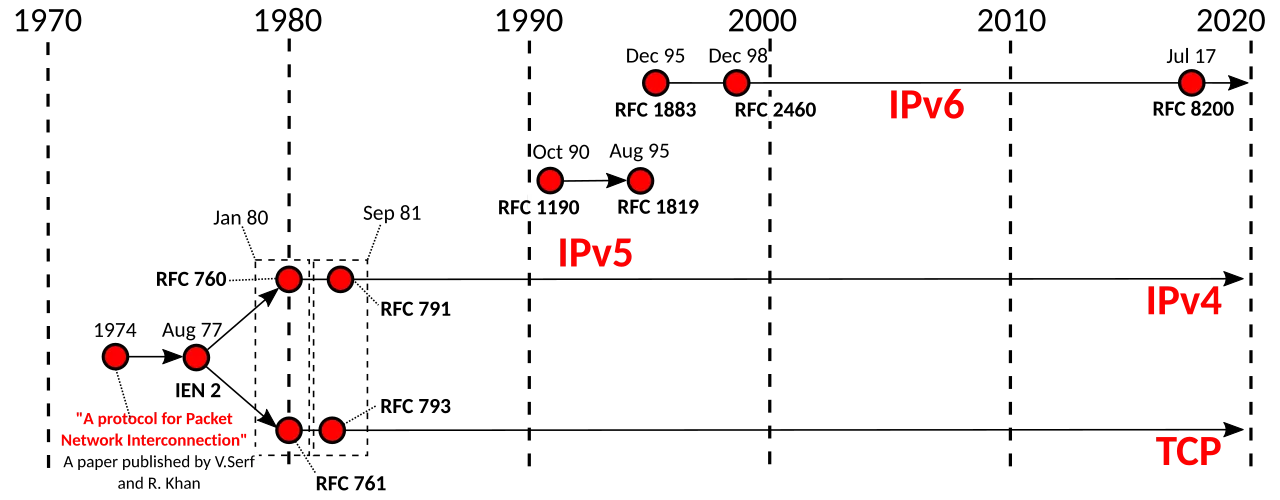
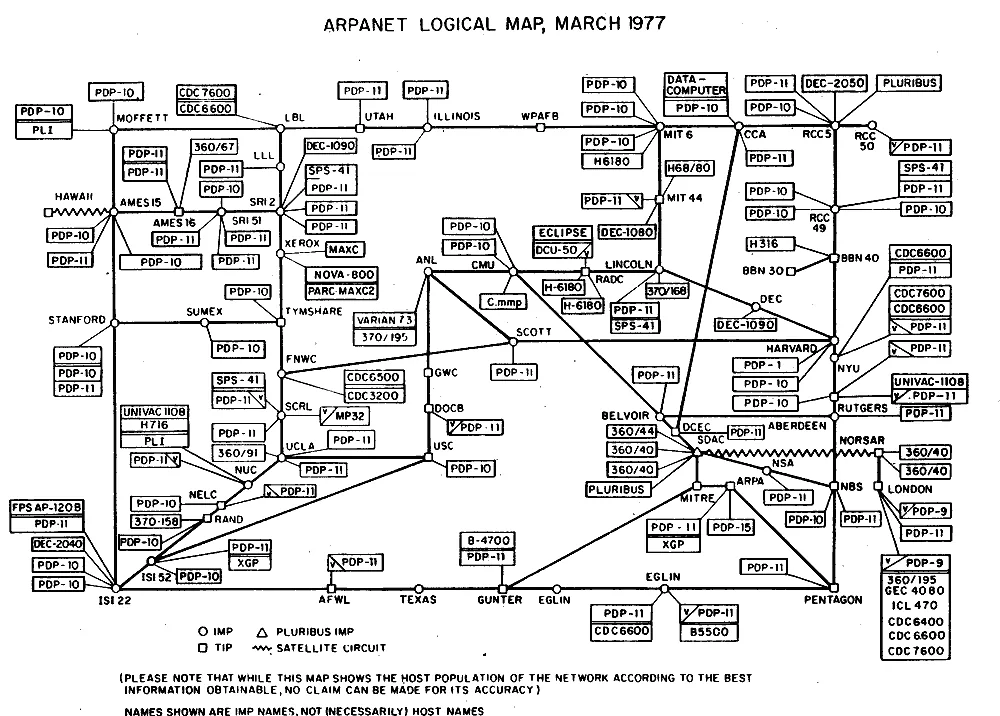
Vinton Gray Cerf earned a mathematics degree from Stanford in 1965, worked briefly as a systems engineer at IBM, then enrolled at UCLA to complete a master's degree in 1970 and a doctorate in computer science in 1972 under Leonard Kleinrock. At UCLA, he contributed to the earliest communication experiments on ARPANET and helped develop the Network Control Program, the first packet-switching communication protocol. Those years alongside Kleinrock gave him a deep understanding of the challenges involved in linking heterogeneous networks. In 1972, Cerf became an assistant professor at Stanford, where his thinking about internetworking protocols grew more focused. The following year, Robert Kahn — an engineer at DARPA — invited him to collaborate on a fundamental problem: how to allow networks of entirely different types to communicate without sharing a common architecture. Their answer, published in 1974 as "A Protocol for Packet Network Intercommunication," laid the foundations of TCP/IP. The decisive innovation was separating two functions previously conflated: transmission control and error checking (TCP) on one side, routing and addressing (IP) on the other. This separation allowed radio, satellite, and wired networks to exchange data regardless of their underlying technologies. From 1973 to 1982, Cerf led DARPA research programs that secured TCP/IP's adoption as the standard for network interconnection. In 1992, he founded the Internet Society, an international organization dedicated to the open development of the network. He joined Google in 2005 as Chief Internet Evangelist. Awarded the Turing Prize in 2004 alongside Bob Kahn and the Presidential Medal of Freedom in 2005, he remains one of the most influential voices in global debates on Internet governance and its future.
1943
· USA
Vint Cerf
American computer scientist who co-authored the TCP/IP protocol with Bob Kahn and is widely regarded as a founding father of the Internet