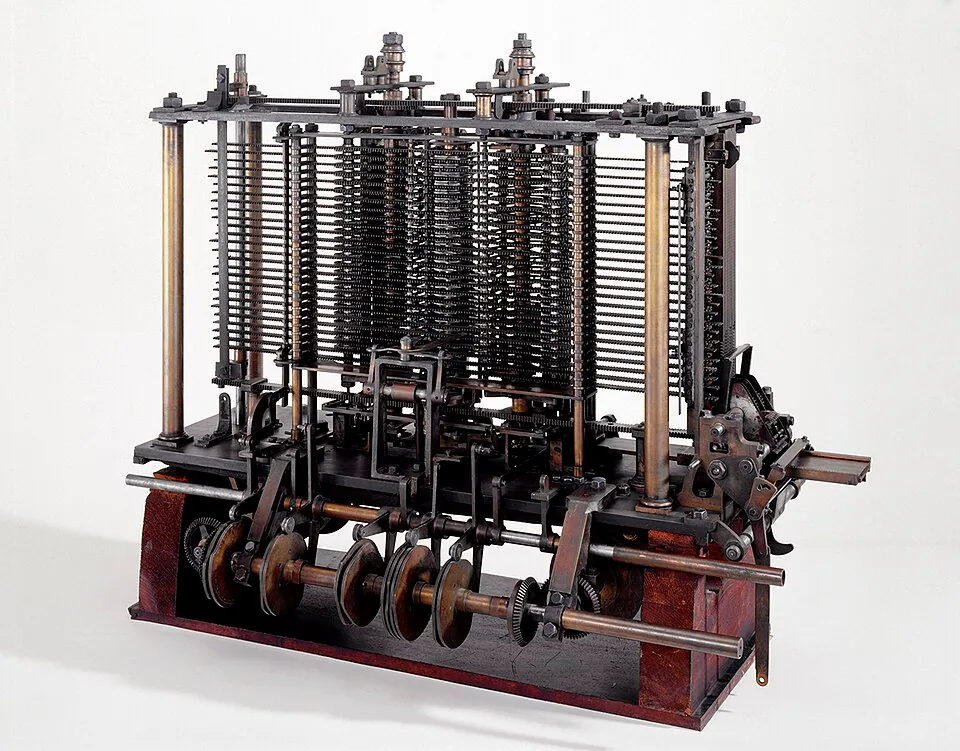
The mechanical origins of computing are rooted in the long European tradition of calculating instruments, from Blaise Pascal's pascaline in 1642 and Leibniz's multiplying machine in 1673, through to the programmable looms of Jacques de Vaucanson and Joseph Marie Jacquard, whose punched cards presented in Lyon in 1804 would durably inspire the pioneers of automatic calculation. The industrial nineteenth century, driven by the need for reliable logarithmic, nautical and actuarial tables, created the intellectual and material conditions for a machine able to compute without human error. This ambition found its first fully formulated expression in Charles Babbage, who designed at Cambridge in 1822 his Difference Engine, and from 1837 onwards the Analytical Engine — a universal computing architecture built around a mill (arithmetic unit), a store (memory) and a reader for punched cards inspired by Jacquard. Ada Lovelace, annotating between 1842 and 1843 Luigi Menabrea's Italian description, published "Note G", which describes an algorithm for computing Bernoulli numbers and is regarded as the first computer program. Herman Hollerith applied mechanography to the 1890 U.S. census, founding in 1896 the Tabulating Machine Company, an ancestor of IBM. In the 1930s, Vannevar Bush built his analogue differential analyser at MIT, while Alan Turing published in 1936 "On Computable Numbers", formalising the notion of a universal machine and laying the theoretical foundations of computer science. This period, dominated by precision mechanics, mathematical logic and punched cards, prepared the shift toward electronics: the concepts of instruction, memory, program and universality were already in place before the vacuum tube ever entered calculation. The physical limits of gears — speed, reliability, bulk — made the transition to electronic components from 1940 onward inevitable. The mechanical era thus bequeathed to the next a complete conceptual vocabulary (algorithm, program, data, loop) and a first pantheon of pioneers, in which Lovelace, Babbage, Hollerith and Turing stand as the central figures.
1800–1940
Mechanical Origins
Innovations of this period
Pioneers of this period
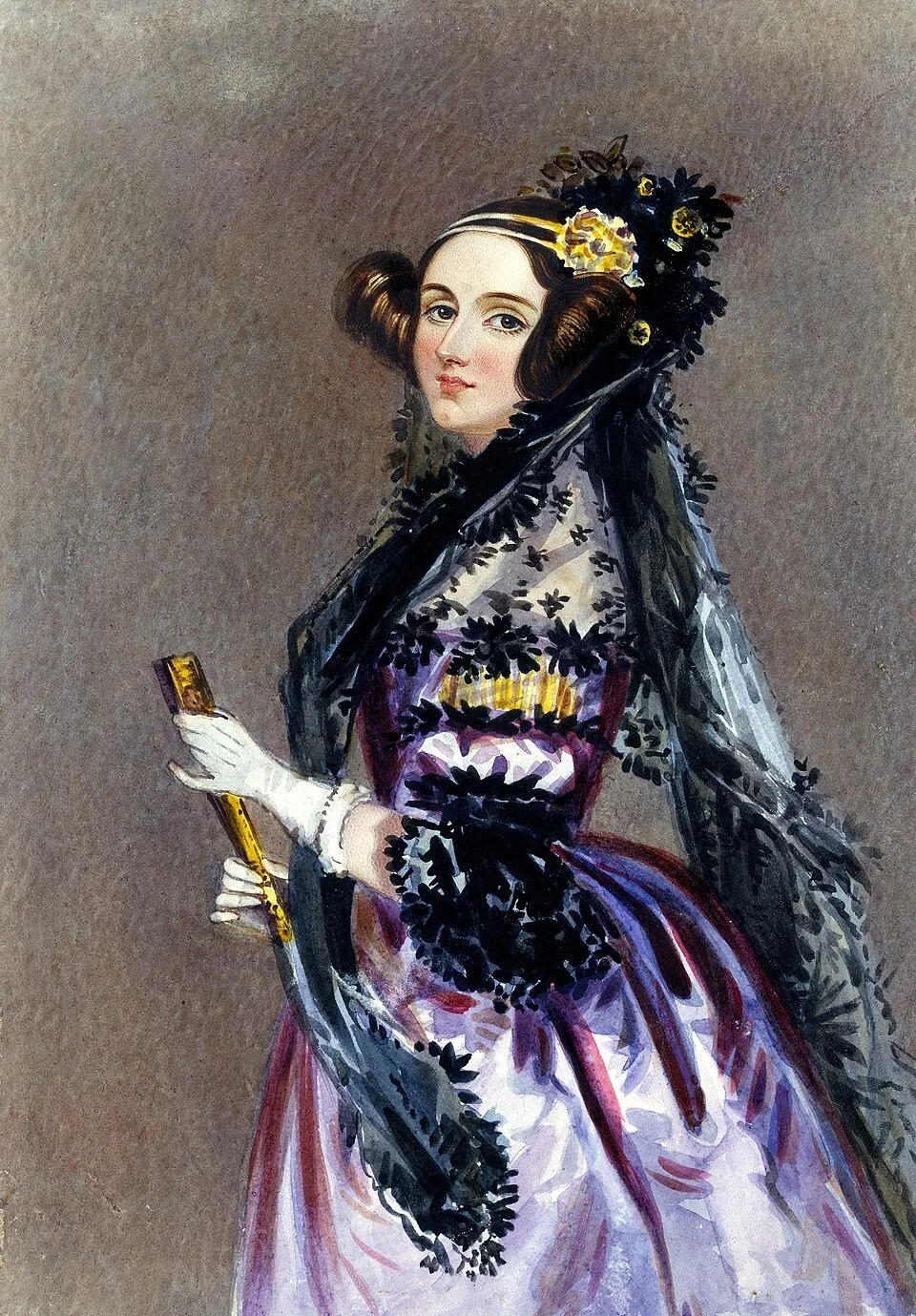 Alfred Edward Chalon — Public domain, via Wikimedia Commons
1815 — 1852
Alfred Edward Chalon — Public domain, via Wikimedia Commons
1815 — 1852
Ada Lovelace
British mathematician, pioneer of computer programming
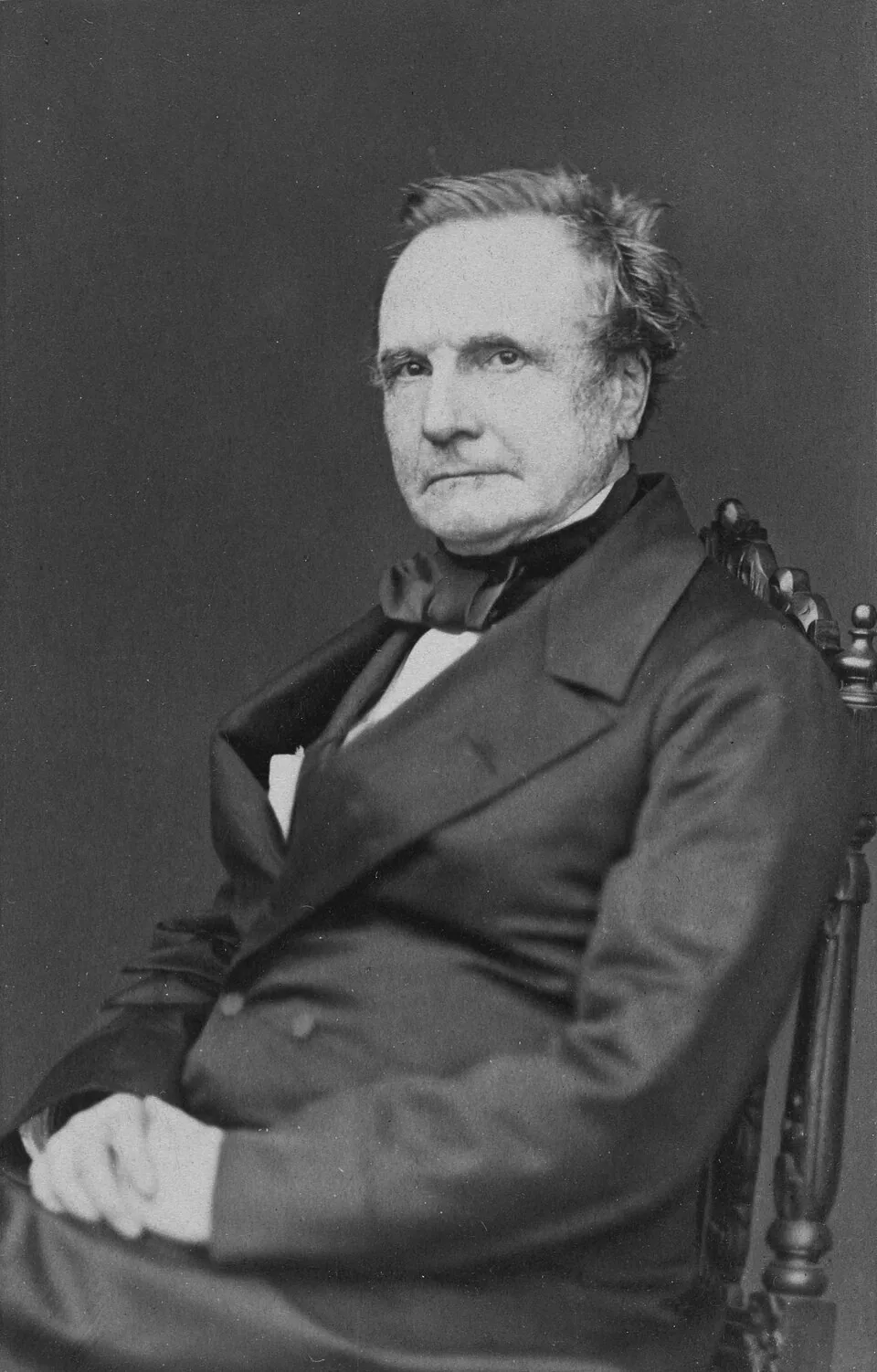 Unknown author — Public domain, via Wikimedia Commons
1791 — 1871
Unknown author — Public domain, via Wikimedia Commons
1791 — 1871
Charles Babbage
British mathematician and inventor, designer of programmable calculating engines
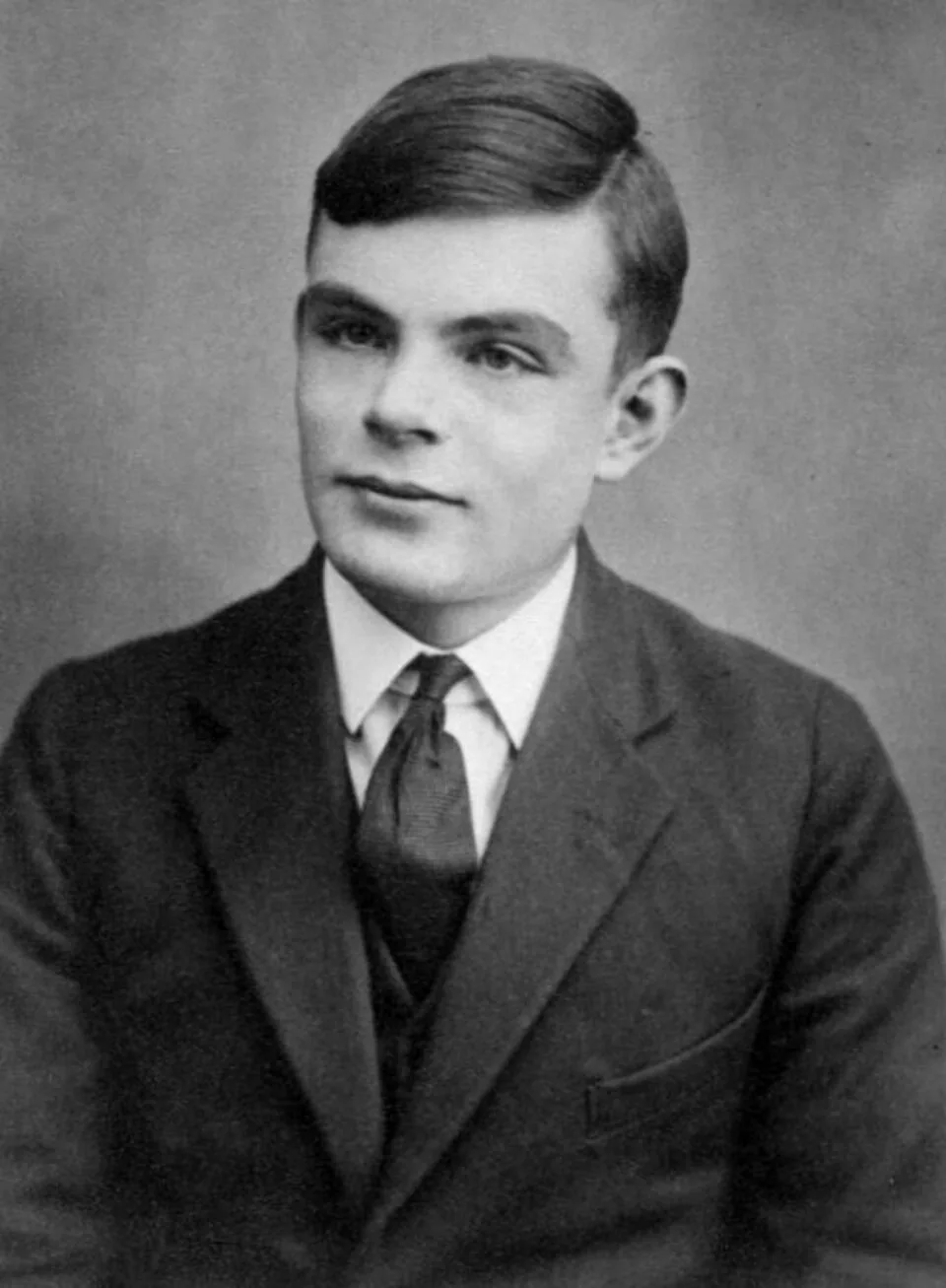 Unknown author — Public domain, via Wikimedia Commons
1912 — 1954
Unknown author — Public domain, via Wikimedia Commons
1912 — 1954
Alan Turing
British mathematician, theoretical founder of computer science and cryptanalyst