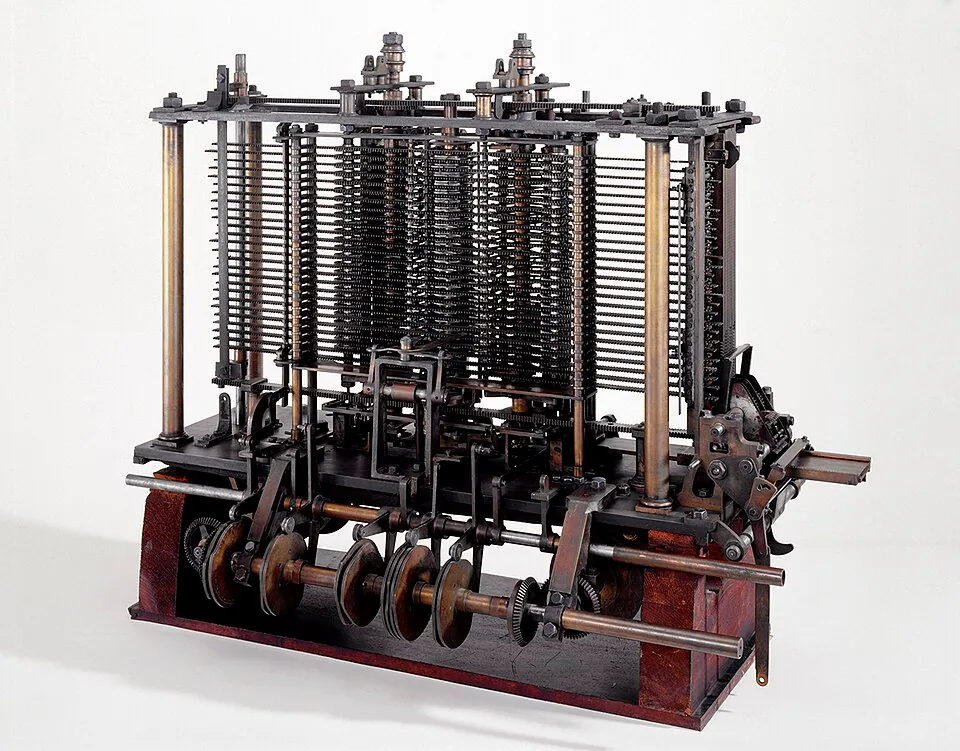
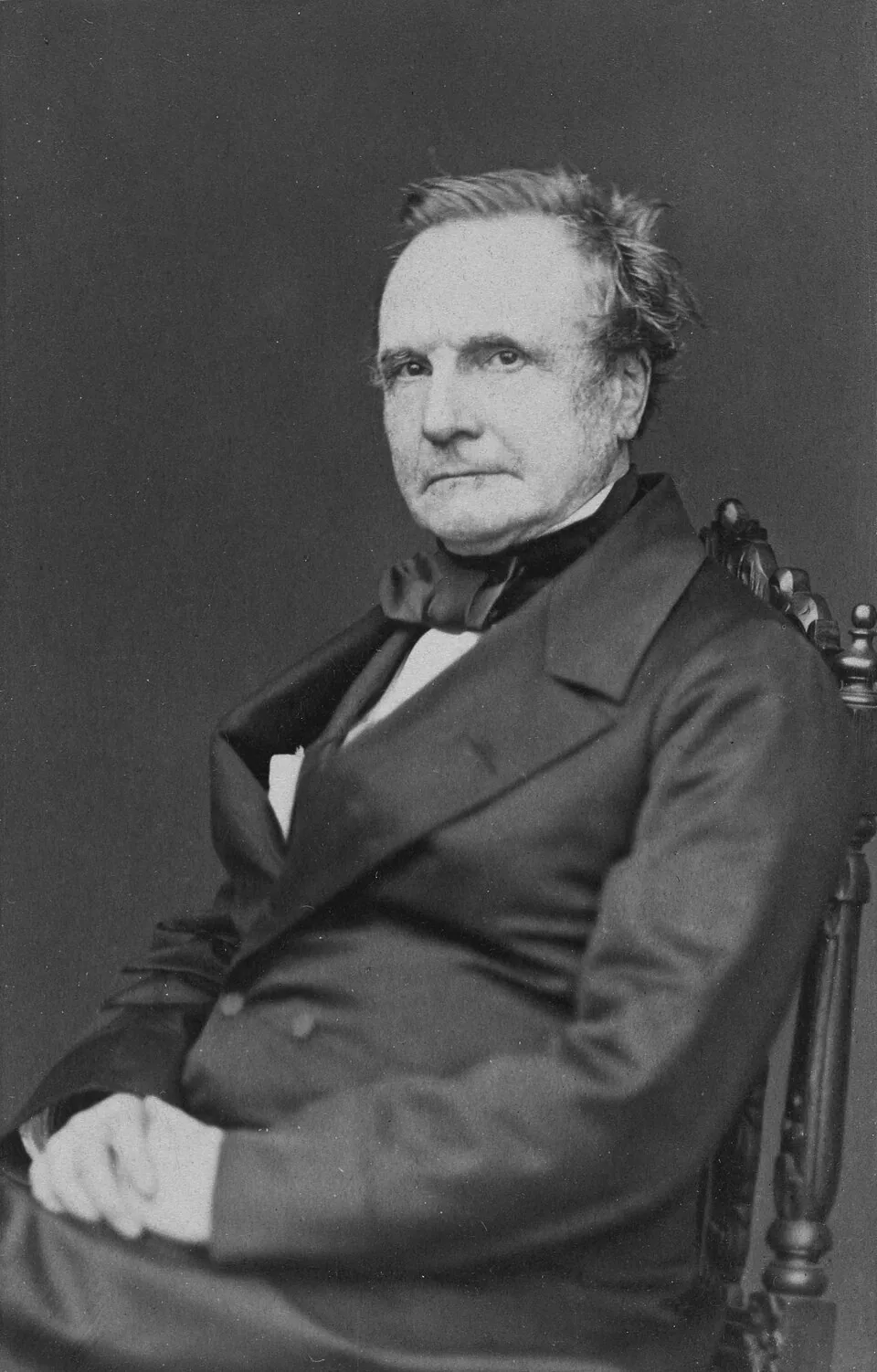
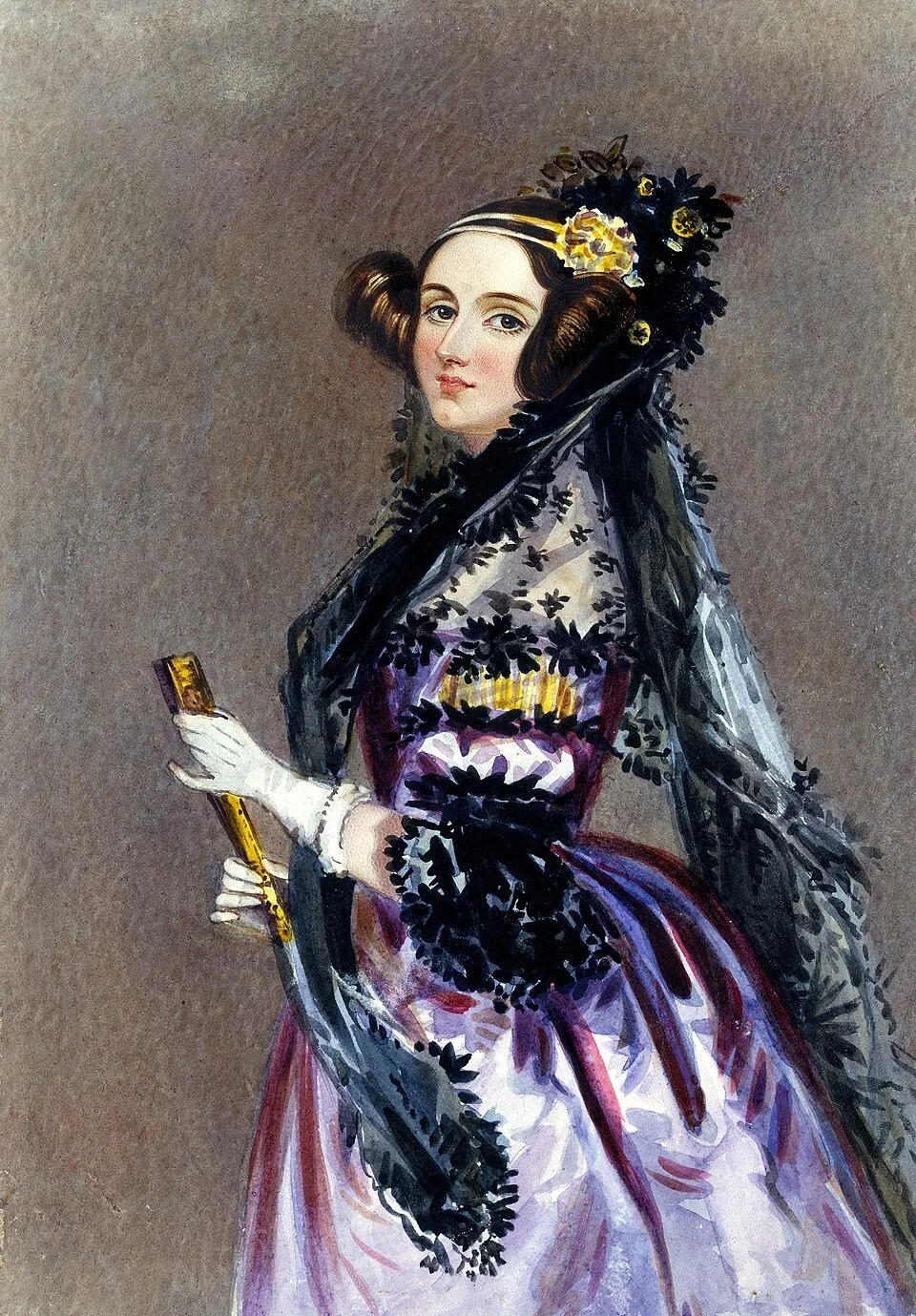
In the early 1830s, Charles Babbage, a British mathematician and engineer and Fellow of the Royal Society, had been working for more than a decade on mechanising calculation. After his Difference Engine, designed to automate the production of numerical tables, he conceived in 1837 a far more ambitious project which he called the Analytical Engine. Babbage drew inspiration from the punched cards used since 1804 in the Jacquard loom for weaving patterns, and from a London scientific milieu that included Augustus De Morgan, Mary Somerville and the young Ada Lovelace, whom Babbage met in 1833. Technically, the Analytical Engine was conceived as a genuine general-purpose programmable calculator. It comprised a "store" intended to hold up to one thousand fifty-digit numbers, a "mill" serving as an arithmetic unit, a punched-card input mechanism distinguishing operation cards from variable cards, and a mechanical printer for output. The design included conditional branching and loops, anticipating the logical structure of modern computers a full century before their electronic realisation. Between 1842 and 1843, Ada Lovelace translated from French Luigi Menabrea's memoir on the engine and added seven analytical notes of her own, including the famous Note G describing an algorithm to compute Bernoulli numbers — widely regarded as the first published computer program. For lack of sufficient funding and because of the extreme mechanical precision required, the Analytical Engine was never fully built in Babbage's lifetime; he died in 1871. His son Henry partially completed the mill in 1888. The conceptual importance of the engine was rediscovered in the mid-twentieth century, when pioneers of electronic computing such as Alan Turing, Howard Aiken and John von Neumann recognised in it a direct prefiguration of the general-purpose computer. It now stands as the founding milestone of the so-called origins period, linking the mechanical tradition of the nineteenth century to the electronic era of the twentieth.
1837
Hardware / Mechanical computing
Machine analytique
Pioneer authors
 Unknown author — Public domain, via Wikimedia Commons
Primary author
Unknown author — Public domain, via Wikimedia Commons
Primary author
Charles Babbage
British mathematician and inventor, designer of programmable calculating engines
 Alfred Edward Chalon — Public domain, via Wikimedia Commons
1815 — 1852
Alfred Edward Chalon — Public domain, via Wikimedia Commons
1815 — 1852
Ada Lovelace
British mathematician, pioneer of computer programming