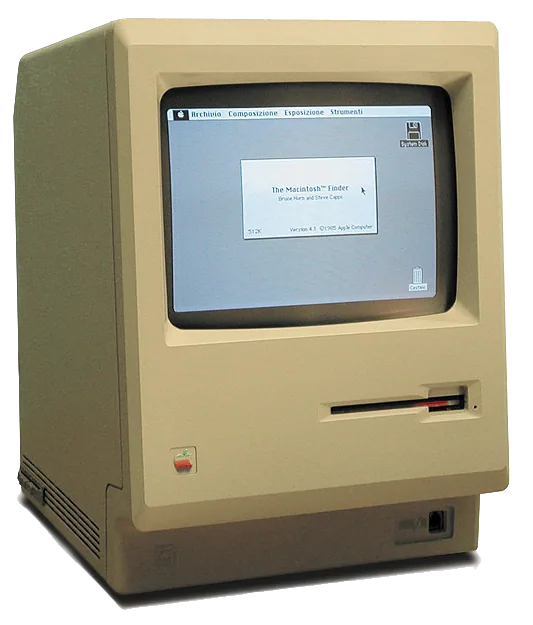
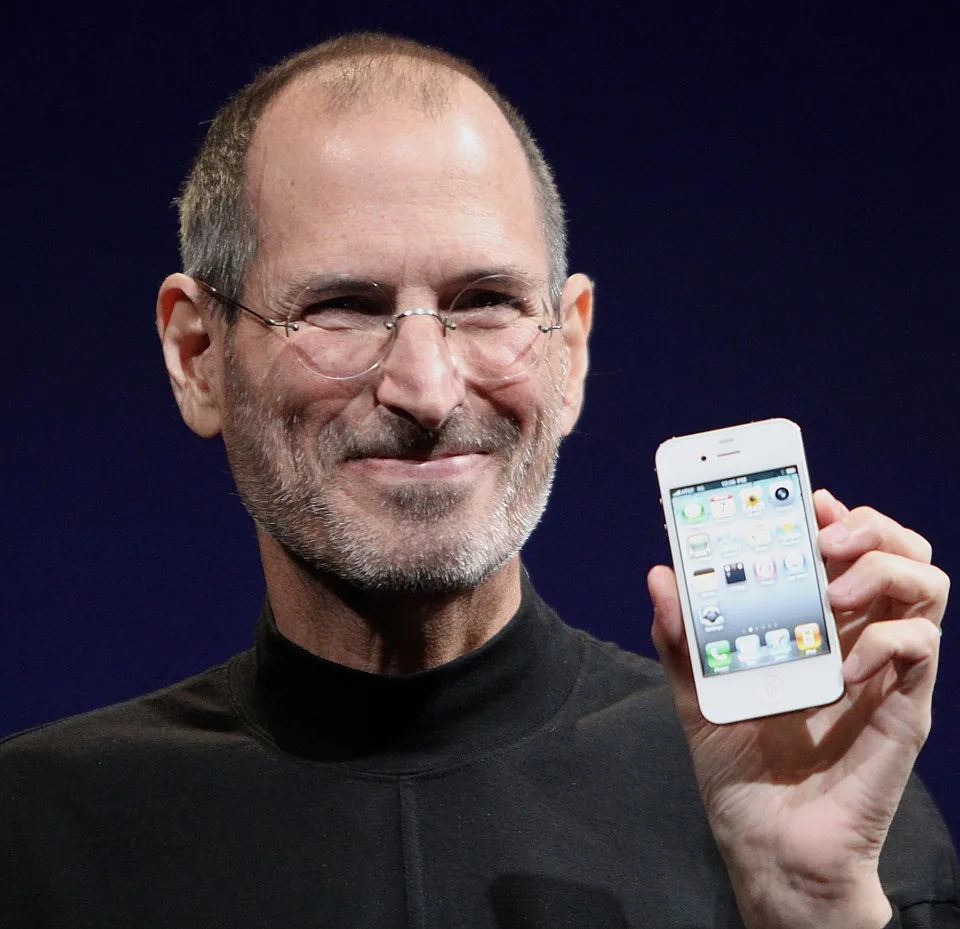
At the turn of the 1980s, Apple — buoyed by the success of the Apple II — was looking for a successor that could renew consumer microcomputing. In 1979, Steve Jobs visited Xerox's Palo Alto Research Center (PARC) and discovered the work on graphical user interfaces (windows, icons, mouse) developed by Alan Kay, Douglas Engelbart and their teams since the late 1960s. He took from it the conviction that a visual interface driven by a mouse could make the computer universally accessible. After the commercial failure of the Lisa project in 1983, deemed too expensive, Jobs took over the Macintosh project, initiated in 1979 by Jef Raskin. The team — Bill Atkinson, Andy Hertzfeld, Burrell Smith, Susan Kare — worked in a separate building under a pirate flag. The Macintosh was unveiled on 24 January 1984 at a resounding event preceded by the "1984" advertisement directed by Ridley Scott and aired two days earlier during the Super Bowl. Priced at 2,495 dollars, it was built around the Motorola 68000 microprocessor at 8 MHz, 128 KB of RAM, a 3.5-inch floppy drive and an integrated 9-inch monochrome display. It democratised direct manipulation with a mouse, proportional typography drawn by Susan Kare, drag-and-drop and a consistent graphical API. The addition in 1985 of the LaserWriter laser printer and Aldus's PageMaker software opened up the desktop publishing market, which economically saved the machine. Despite initially modest sales against the IBM PC compatibles and MS-DOS, the Macintosh established itself lastingly as the reference for the graphical user interface. It inspired Windows from 1985 onwards, transformed the publishing, design and music professions, and founded the Apple product culture that would return to the forefront with Jobs's return in 1997, then the iPod (2001) and the iPhone (2007). Its ergonomic legacy — desktop, windows, pull-down menus, direct manipulation — still structures every mainstream interface in 2024.
1984
Hardware / Microcomputer
Macintosh