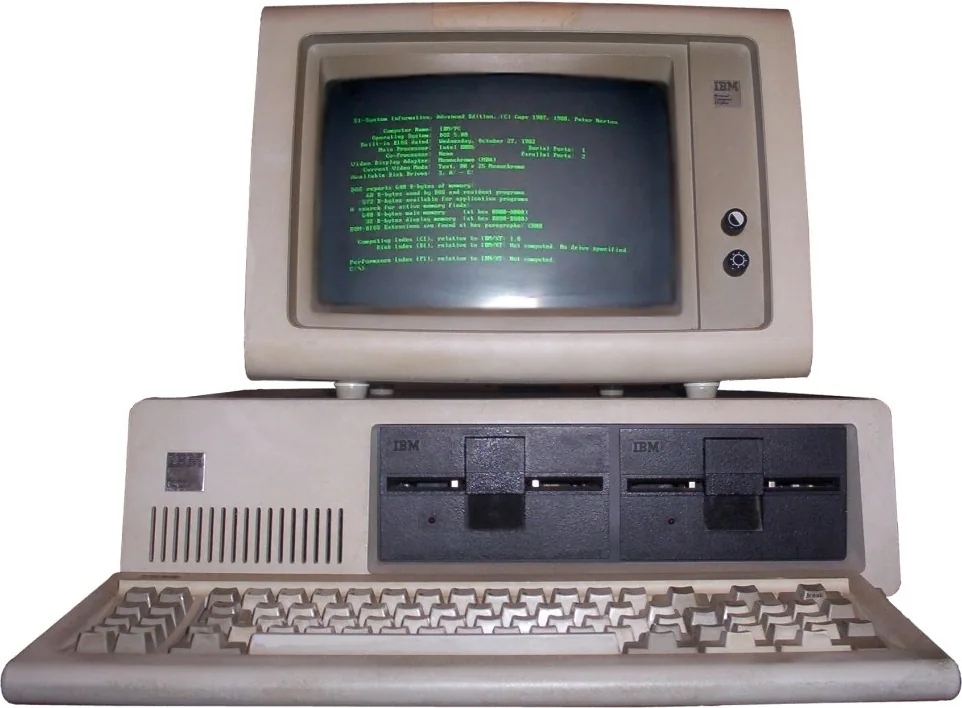
In the early 1980s, IBM — the historical giant of enterprise computing with its mainframes — watched with concern the rise of microcomputers such as the Apple II (1977), TRS-80 and Commodore PET, which were finding their way into corporate offices outside its sales channels. In 1980 the company's leadership tasked Bill Lowe in Boca Raton, Florida, with the secret mission of designing a personal computer in less than a year, with a small team known as Project Chess led by Don Estridge. To meet the deadline, IBM broke with its habits and made the radical choice of an open architecture based on off-the-shelf components, including the Intel 8088 microprocessor at 4.77 MHz and, after failed negotiations with Digital Research, the PC-DOS 1.0 operating system licensed by Microsoft from QDOS, which it had bought from Seattle Computer Products. The IBM Personal Computer model 5150 was officially unveiled on 12 August 1981 at the Waldorf Astoria in New York. Equipped with 16 KB to 256 KB of RAM, one or two 5.25-inch floppy drives and a monochrome or CGA colour monitor, it sold from 1,565 dollars. The industrial strategy tilted history: by documenting its BIOS and allowing Intel and MS-DOS to sell to competitors, IBM accepted — perhaps without measuring the full scale — the rapid appearance of a swarm of PC-compatibles. As early as 1982, Compaq produced a cleanly reverse-engineered BIOS and released a compatible portable. Within a few years Dell, HP, AST and Tandon followed. The PC standard imposed itself as the dominant architecture of global personal computing. It propelled Microsoft, the supplier of MS-DOS and then Windows (1985), and Intel, the supplier of x86 processors, into the world's largest companies — the Wintel duopoly. It quickly overtook the Apple II and lastingly placed the Macintosh (1984) in a minority position. By democratising compatible desktop computing, the IBM PC laid the foundations of the personal computer market which, combined with the Internet from 1991 onwards, would transform the world economy.
1981
Hardware / Microcomputer
IBM PC