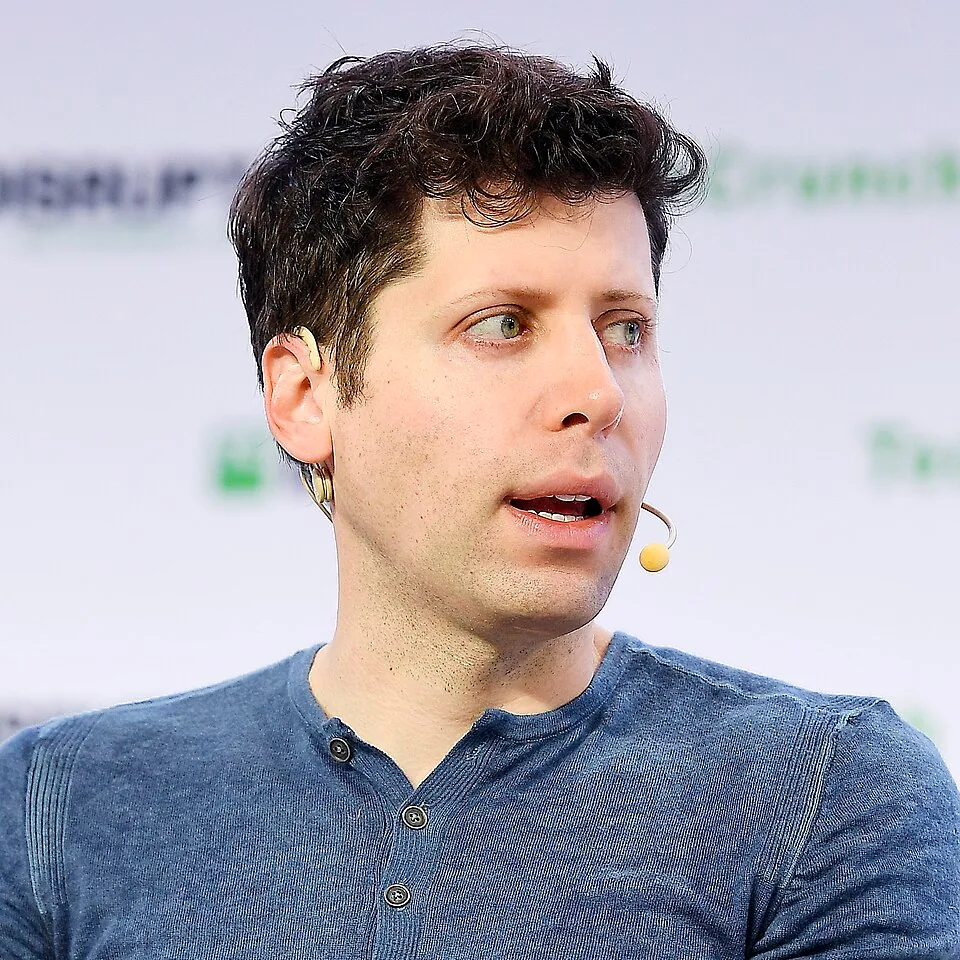
After the spectacular success of ChatGPT at the end of 2022, OpenAI was preparing, under the direction of Sam Altman and with the chief scientist Ilya Sutskever, a new generation of models, trained over several months on the supercomputing infrastructure built with Microsoft on Azure. The project, launched internally as early as 2021, mobilised tens of thousands of NVIDIA A100 GPUs and a multidisciplinary team of machine-learning researchers, distributed-systems engineers, safety specialists and human evaluators. The technical framework still rested on the 2017 transformer architecture, augmented by training improvements, a likely mixture-of-experts approach — OpenAI did not publish the details — and stronger alignment through RLHF and systematic red-teaming. GPT-4 was officially announced on 14 March 2023. OpenAI published a nearly hundred-page technical report, deliberately sparing of architectural details but rich in evaluations. The model was multimodal: it now accepted both text and images as input. On standardised exams it scored far higher than GPT-3.5 — for example, around the 90th percentile on the American Uniform Bar Exam, compared with the 10th percentile for GPT-3.5 — along with high-level performance on most academic tests (SAT, GRE, biology, history). It was immediately integrated into ChatGPT for paying subscribers, Microsoft Copilot, Bing Chat, and made available to developers via the OpenAI API. Later versions (GPT-4 Turbo in November 2023, GPT-4o in 2024) increased speed, context window — up to 128,000 tokens — and real-time voice and vision capabilities. GPT-4 became in 2023 the implicit reference of the generative AI industry and triggered a global race: Google responded with Gemini 1.0 and 1.5, Anthropic with Claude 2 and 3, Meta with Llama 2 and 3, Mistral AI in France. Companies reorganised their internal tools, and governments — the European Union with the AI Act adopted in 2024, the United States, the United Kingdom — drew up regulatory frameworks. Debates on the copyright status of training corpora, systemic risks and energy consumption grew sharper. GPT-4 symbolically closes the first phase of the generative AI era opened by ChatGPT and cements Sam Altman as one of the dominant figures of the decade's technological landscape.
2023
AI / Large language model
GPT-4